Thyroid Shields & Collars
Complete Guide to Neck Radiation Protection
Key Takeaways
- The thyroid gland is among the most radiosensitive organs in the human body, with documented increased cancer risk at cumulative doses as low as 50 to 100 mGy.
- Its superficial anatomic location means it receives both primary and scatter radiation with minimal natural attenuation.
- Thyroid shields at 0.5 mm Pb equivalency can reduce thyroid dose by up to 45 percent during typical imaging procedures.
- For medical staff in interventional and fluoroscopic settings, thyroid shielding is standard occupational protection and expected by regulators and accreditors.
- Lead equivalency (0.25, 0.35, or 0.5 mm Pb), core material (lead or lead-free composite), closure type, style, fit, and fabric material are the specifications that actually vary between products, not the name.
- Annual radiographic inspection, proper storage, and consistent disinfection protect both the shield itself and the people wearing it.
- Consistent use of a well-specified thyroid shield is one of the highest-benefit, lowest-effort practices in occupational radiation safety.
The thyroid gland sits superficially in the anterior neck, directly in the scatter path of nearly every medical imaging procedure performed above the diaphragm. It’s also among the most radiosensitive organs in the human body, with documented increased cancer risk at cumulative doses as low as 50 to 100 mGy.
For clinicians performing interventional, fluoroscopic, and diagnostic imaging procedures, and for purchasing managers responsible for outfitting them, a well-specified thyroid collar is one of the highest-yield occupational health investments available.
This guide goes over what every single practitioner should know about neck radiation protection, such as the anatomy that makes the thyroid so vulnerable, the scenarios that require shielding, and the specifications that separate an effective thyroid collar from one that merely looks the part.
Why the Thyroid Gland Requires Dedicated Protection
Many clinicians treat thyroid shielding as a nice-to-have rather than a clinical necessity. Surveys of radiology staff consistently show that lead aprons are worn 93 to 100 percent of the time, while thyroid shields are only worn 81 to 100 percent of the time.
That gap in compliance shows a broader gap in understanding. The thyroid is not just another soft tissue structure that happens to sit in the scatter field. It’s one of the most radiation-vulnerable organs in the body.
The epidemiological evidence on radiation-induced thyroid cancer is unambiguous. Thyroid cancer was the first solid malignant tumor found with increased incidence among Japanese atomic bomb survivors.
Elevated thyroid cancer rates followed the Marshall Islands nuclear tests and the Chernobyl accident. The risk of radiation-induced thyroid cancer increases measurably at mean doses above 50 to 100 mGy, and the excess relative risk per Gray has been estimated between 1.31 and 7.7 across major cohort studies.
Thyroid cancer has a minimum latency of 5 to 10 years after exposure, which means occupational exposure accumulated over a career may not show any signs until decades later, and at that point, it’s no longer preventable.
Radiation exposure also carries lower but documented risks of hypothyroidism, thyroid nodules, and autoimmune thyroid disease.
Why a Thyroid Shield Actually Helps
A thyroid shield addresses the one problem a lead apron cannot, which is the unprotected gap between the apron’s upper edge and the chin. At a standard 0.5 mm Pb lead equivalency, a properly fitted thyroid shield reduces thyroid dose by approximately 97% during typical imaging scenarios.
For a radiation worker accumulating thousands of exposures across a career, that level of attenuation translates into a meaningful reduction in lifetime thyroid dose and, by extension, stochastic cancer risk.
Thyroid shields are small, inexpensive, and easy to wear. Their consistent use is one of the lowest-effort, highest benefit practices in occupational radiation safety.
What Makes the Thyroid Vulnerable
Clinicians who understand “the thyroid is radiosensitive” as a statement without understanding why are more likely to underestimate the need for consistent shielding. A solid grasp of the anatomy and cellular biology clarifies the stakes.
Without this context, thyroid shields get treated as discretionary PPE. Staff skips them for “quick” procedures. Trainees are not taught to wear them every single time they do a procedure. Purchases go for the cheapest option rather than the right one. All of these behaviors increase cumulative occupational thyroid dose.
These 3 Reasons Explain Thyroid Vulnerability
Location. The thyroid gland sits in the anterior neck, just below the larynx, with essentially no overlying soft tissue to attenuate incident radiation. Unlike deeper organs that benefit from the attenuation of overlying bone and tissue, the thyroid is effectively at the body’s surface.
In fluoroscopic procedures, the thyroid sits squarely in the scatter field from the patient. A shield placed over the anterior neck, therefore, provides a near-complete coverage with very little material.
Tissue weighting. In the ICRP framework used to calculate effective dose, the thyroid is assigned a tissue weighting factor of 0.04, recognizing that its contribution to overall stochastic risk is substantial. The thyroid tissue weighting factor is four times that of the skin or salivary glands.
Cellular radiosensitivity. Thyroid follicular cells are highly proliferative compared to many other tissue types, and proliferating cells are more susceptible to radiation-induced DNA damage.
This sensitivity is particularly elevated in children and adolescents, where the excess relative risk of radiation-induced thyroid cancer is considerably higher than in adults.
Papillary thyroid carcinoma, the most common radiation-induced thyroid malignancy, frequently involves RET/PTC rearrangements, which are chromosomal changes associated with radiation-induced DNA breakage.
When Thyroid Shields are Required vs. Recommended
Clinicians and purchasing managers who default to “we’ve always used them” or “we’ve never used them” are still operating without a clear understanding of what actually applies.
Getting the requirement versus the recommendation distinction wrong creates two mistakes:
- Under-shielding (skipping thyroid protection where it is required or clinically indicated), which increases staff and patient dose and exposes the practice to regulatory action.
- Over-shielding (insisting on thyroid collars in situations where current evidence argues against them, such as during panoramic dental imaging) can block the primary beam, force retakes, and increase total exposure.
What We Recommend
Here are some clear recommendations we have depending on the field you’re in.
Occupational protection – where thyroid shields are standard. For medical staff working within the scatter range of fluoroscopy, interventional procedures, or surgical fluoroscopy, thyroid shields are essential PPE alongside lead aprons. The NCRP and state occupational radiation protection regulations expect thyroid shielding to be available and, in most cases, used whenever staff cannot step behind structural shielding.
This applies to interventional cardiology, interventional radiology, vascular surgery, orthopedic surgery involving fluoroscopy, pain management, electrophysiology, and general fluoroscopic procedures.
For dental staff who remain in the operatory during intraoral, panoramic, cephalometric, or CBCT imaging, thyroid shields are similarly standard occupational protection.
Dental patients – where routine use is no longer recommended. The American Dental Association’s February 2024 guidance, aligned with the American Academy of Oral and Maxillofacial Radiology’s 2023 statement, no longer recommends routine thyroid collar use during any form of dental imaging
The reason behind it lies in evidence that shields do not block internal scatter, and the retake burden caused by shields interfering with the primary beam.
However, several states, such as California, still legally require patient thyroid shielding during dental X-rays, and practices in those states must continue to comply with state law regardless of the ADA’s updated recommendation.
Individual patients who request a thyroid collar should also be accommodated, where the shield does not interfere with imaging.
Medical patients undergoing fluoroscopy and CT. Patient thyroid shielding during medical imaging is context-dependent. For CT examinations where the thyroid falls outside the primary scan range, an external thyroid shield on the patient can reduce dose to the gland by a factor of approximately two, and many facilities continue to use shields for pediatric head and neck CT in particular.
For fluoroscopic procedures, patient thyroid shielding is used selectively, typically when the procedure involves prolonged imaging near the neck.
Caregivers and patient holders. Any adult who must remain in the imaging suite to assist a patient, such as a parent holding a pediatric patient, or a caregiver supporting a patient who cannot remain still, should wear a thyroid shield in addition to a lead apron.
This requirement is not affected by any of the recent patient-shielding updates.
Thyroid Collar Styles and Their Uses
Thyroid collars are not one-size-fits-all. Style selection directly impacts fit, coverage, and even compliance. Here is a breakdown of the main styles and where each one fits.
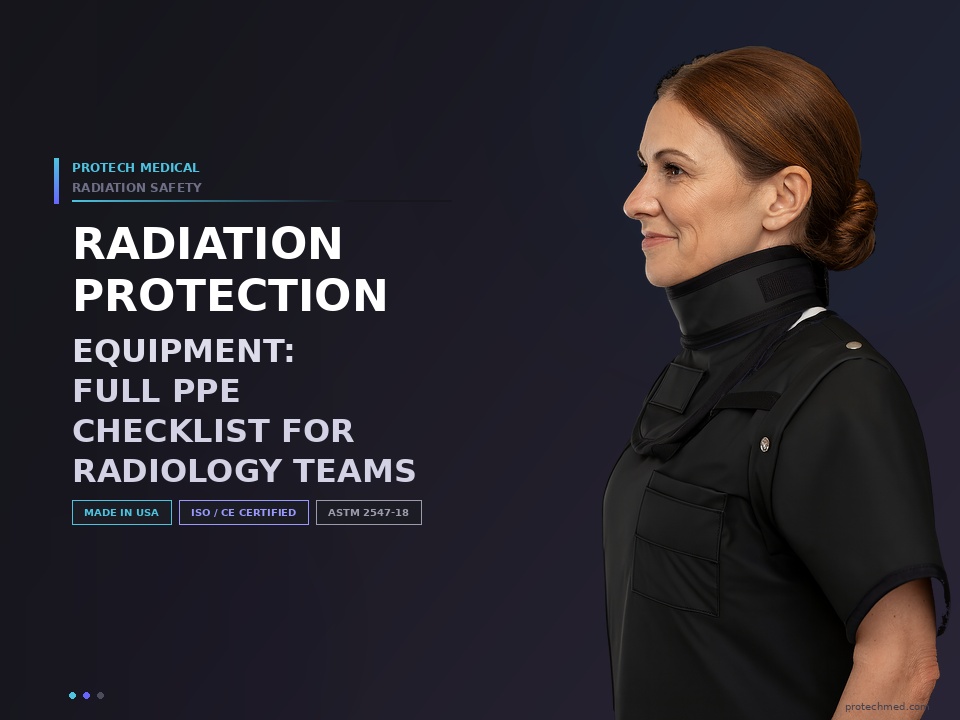
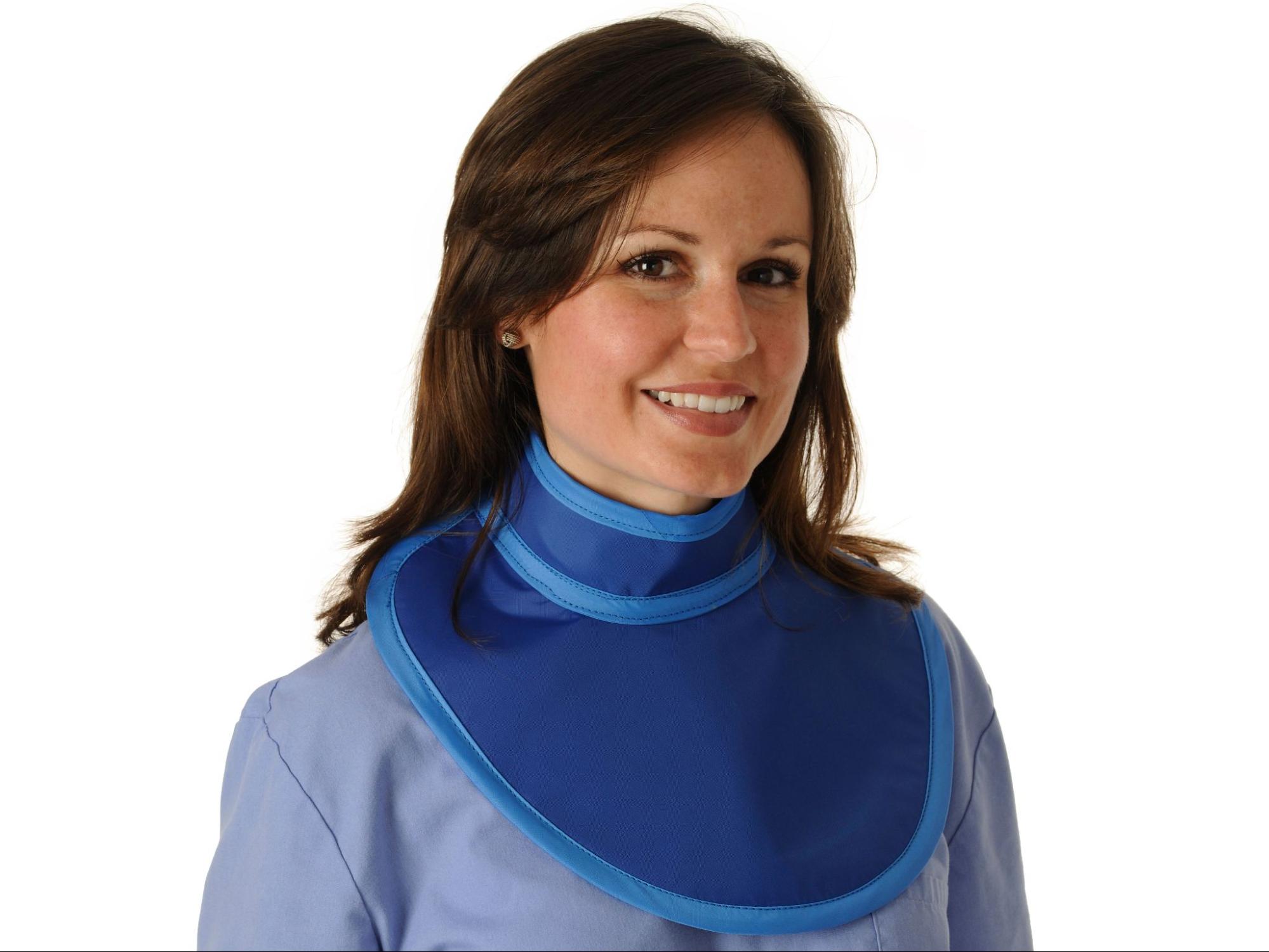
Standard Thyroid Collar: This is the baseline for almost all clinical environments. A lead-lined bib that wraps around the neck and secures at the back, covering the anterior thyroid from any sort of scatter radiation. Available in both original and standard fits, where the original fit sits lower on the neck and suits most general radiology tasks, while the standard offers a higher fit with fuller coverage for higher-scatter environments.
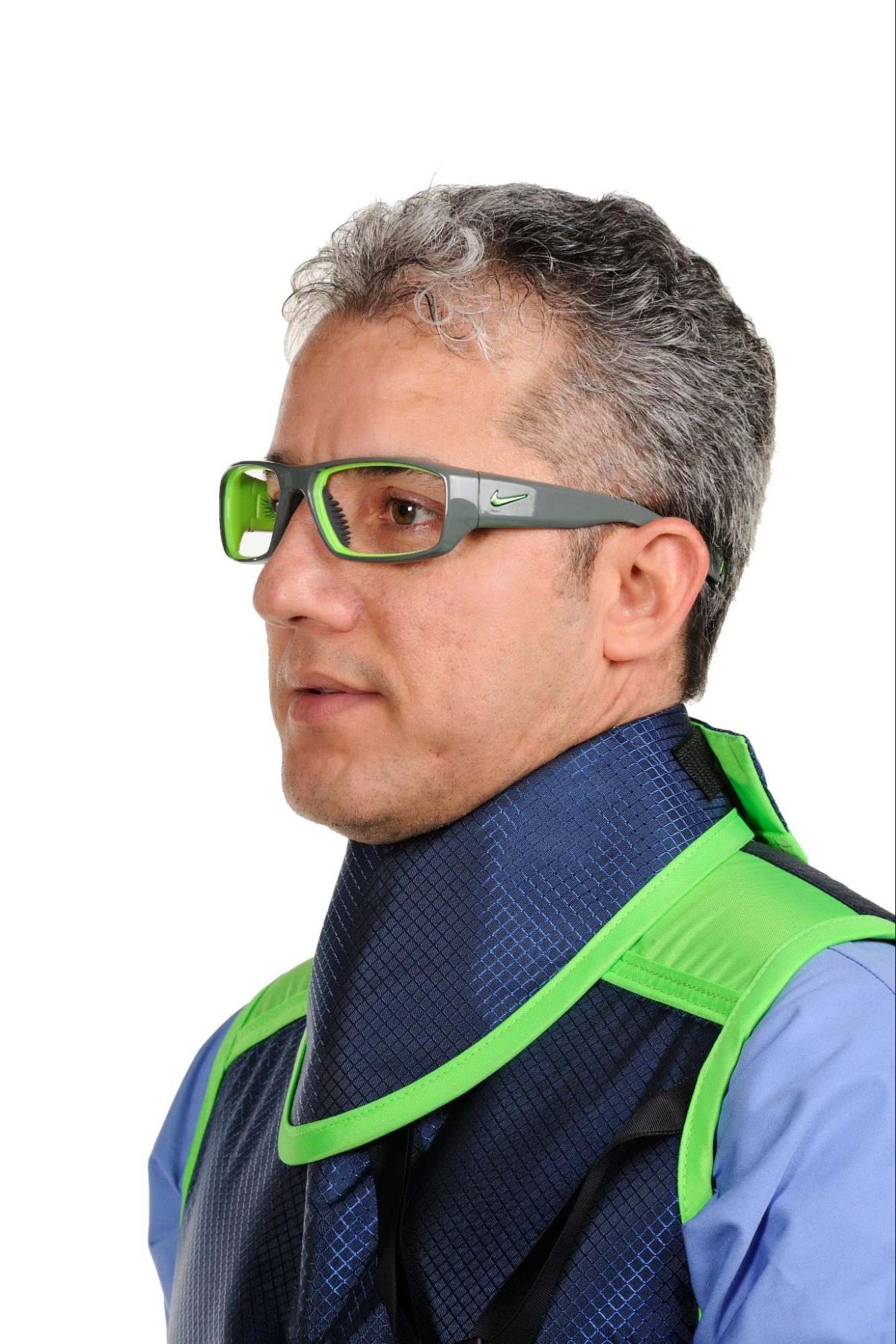
Oversized Bib Thyroid Collar: Designed for procedures with elevated scatter from multiple angles. The extended bib is perfect when additional coverage is needed beyond the standard used for the anterior field. The Proguard style adds front and back shielding in a single garment, making it ideal for interventional procedures where scatter angles are less predictable.
Mammography Thyroid Collar: A low-profile collar designed specifically for breast imaging workflows. Standard thyroid collars can directly interfere with mammography positioning by adding bulk at the neck and upper chest. This style eliminates this issue with a reduced-profile design that offers full thyroid protection without compromising image acquisition or patient positioning.
Disposable Thyroid Collar: One of the most practical and underutilized options. Thyroid collars accumulate sweat, makeup, skin oils, and body fluids over repeated use. Disposable collars address this by eliminating hygiene concerns associated with reusable collars in shared-use settings.
Sewn-In Thyroid Collar: A frequently overlooked option to one of the most persistent issues in radiation protection, which is misplacing or having a thyroid collar stolen. It’s reported among radiologists, technologists, and nurses that thyroid collars go missing at a surprisingly high rate. A sewn-in thyroid collar integrates directly into the lead apron at the neckline, making it a permanent part of the garment rather than a detachable accessory. This means that the collar cannot be removed, borrowed, or stolen independently of the apron itself.
The right style entirely depends on the procedure, the environment, and the operational realities of your facility. For most general imaging workflows, a standard collar at 0,50 mm Pb is the appropriate starting point.
Thyroid Protection, Specified for the People Wearing It
The thyroid gland’s vulnerability to radiation is not a matter of opinion; it’s one of the most documented findings in radiation medicine. What does vary is how well a facility translates this into daily practice.
Protech Medical manufactures thyroid collars for clinicians and facilities where that translation has to work. Lead and lead-free options across the 0.25, 0.35, and 0.5 mm Pb equivalencies. A durable exterior that tolerates disinfection protocols modern practice requires, and documentation that supports annual inspection programs, including Joint Commission audits.
Ready to equip your team with thyroid shields built to current clinical standards? Explore our thyroid collar range or contact our team to discuss your facility’s specific requirements
Frequently Asked Questions About Thyroid Shields and Collars
Is the thyroid really one of the most radiosensitive organs? Yes. The thyroid gland is among the organs at highest risk of radiation-induced cancer, with documented elevated thyroid cancer incidence at mean doses above 50 to 100 mGy. Its superficial location in the anterior neck, its high cellular proliferation rate, and its substantial tissue weighting factor in effective dose calculations all contribute. The risk is particularly elevated when exposure occurs in childhood or adolescence, which is why thyroid protection for pediatric patients in medical imaging remains an active clinical concern.
What lead equivalency should a thyroid shield have? The clinical standard for most medical and dental applications is 0.5 mm Pb, which provides up to 97 percent thyroid dose reduction in typical imaging scenarios.
Are thyroid shields and thyroid collars the same product? Yes. "Thyroid shield" and "thyroid collar" describe identical products, and "thyroid guard," "lead collar," and "thyroid protector" are also used interchangeably. The variations that matter between products are lead equivalency, core material, closure type, fit, and outer shell, not the name. We cover this question in more depth in our companion article on thyroid shield vs. thyroid collar terminology.
Do dental staff still need thyroid shields after the ADA's 2024 update? Yes. The February 2024 ADA recommendation discontinued routine thyroid collar use for dental patients during intraoral, panoramic, cephalometric, and CBCT imaging. It did not change occupational protection requirements for dental staff. Operators, hygienists, and assistants who remain in the operatory during exposure continue to need thyroid shielding. Several states also still legally require patient shielding, and practices in those states must continue to comply with state law.
Are lead-free thyroid shields as effective as lead ones? When manufactured to the same lead equivalency and tested to ASTM F2547-18 and IEC 61331-1/IEC 61331-3 standards, lead-free composite thyroid shields using antimony, bismuth, and other rare earth blends deliver attenuation comparable to traditional lead at reduced weights and reduced ecological harm. Verify that manufacturer attenuation data covers the specific kVp range your department uses, and confirm ASTM certification before purchasing.
How often should thyroid shields be inspected? Annually, using both visual and radiographic inspection methods. Visual and palpation checks alone will miss small defects in the internal shielding layer. Defects larger than approximately 11 mm² in a thyroid shield are commonly cited as the threshold for replacement. Document each inspection with an identifier, date, inspector, and pass/fail determination since Joint Commission audits expect to see these records.