X-Ray Thyroid Shield Guide for Dental & Radiology Settings
Key Takeaways
- The thyroid is a high-priority protection target. The ICRP recognizes it as one of the most radiosensitive organs in the body, making thyroid shielding a clinical imperative rather than a compliance checkbox.
- A dedicated 0.5mm LE thyroid collar attenuates roughly 97-99% of the scatter that reaches the neck, protection that a torso lead apron doesn’t provide on its own.
- Lead aprons do not protect the thyroid. The neck is anatomically uncovered by standard torso aprons; a dedicated thyroid collar is required to close that gap.
Walk into almost any radiology suite, and you will see lead aprons over patients as a standard precaution. Yet the thyroid, which is one of the most radiosensitive organs in the human body, is left fully exposed far more often than it should be.
The consequences of this gap should not be ignored. Because thyroid dose accumulates over a career, the gap between shielded and unshielded exposure adds up, and most of all for staff who work close to the beam every day.
This guide goes over everything radiology technologists, and department managers need to know about X-ray thyroid shields, mainly how they work, what thickness is ideal, when they should be used, and how to integrate them into their PPE system for both their staff and their patients.
What is an X-Ray Thyroid Shield and How Does It Work?
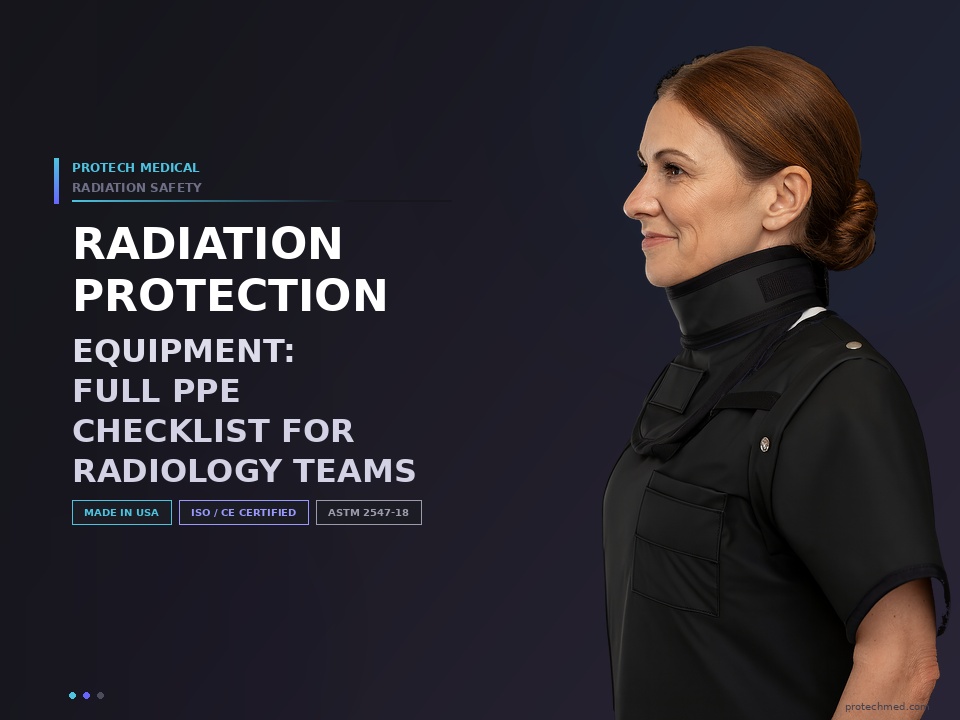
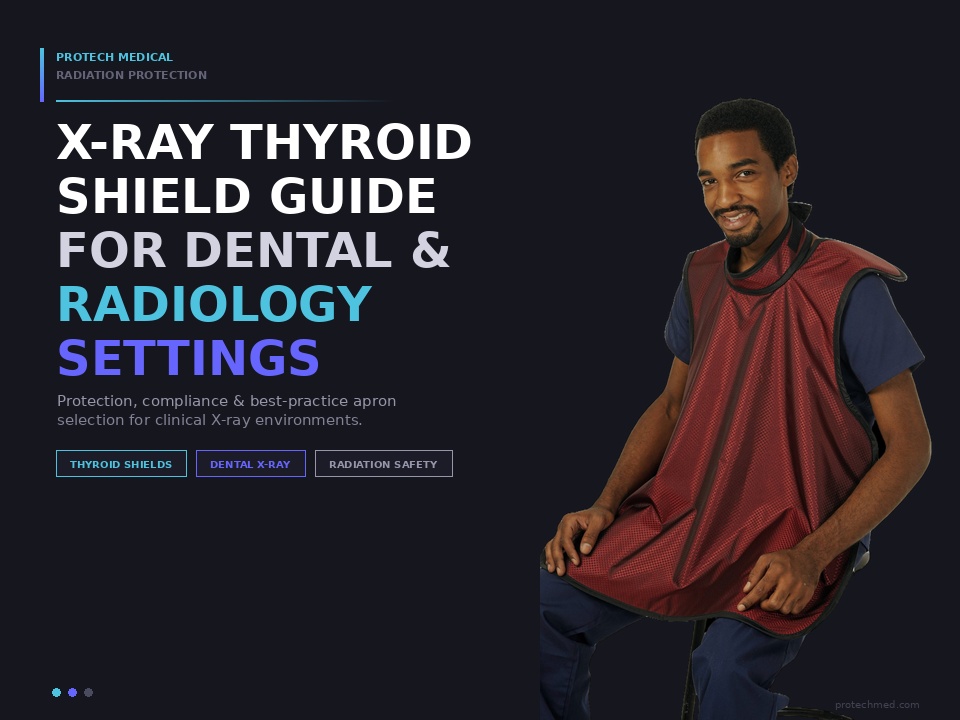
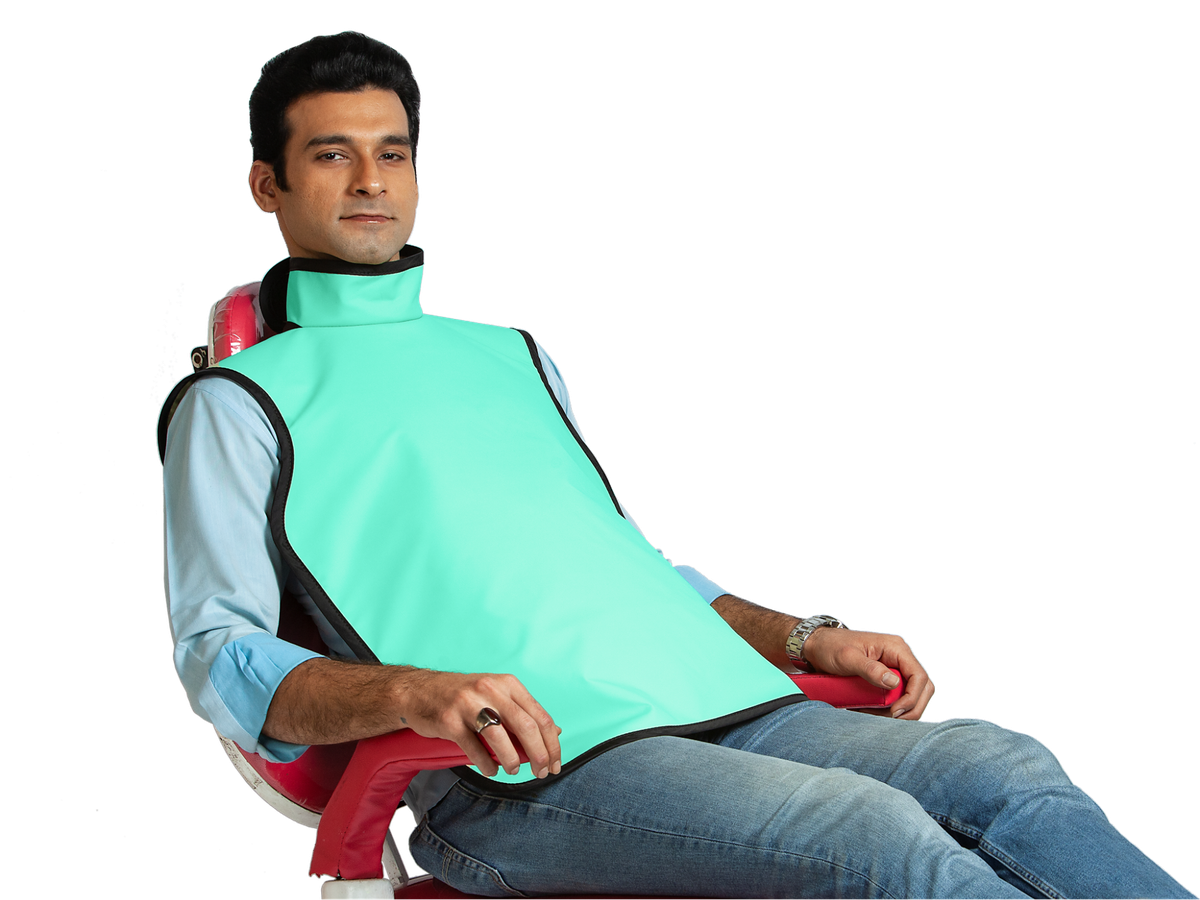
An X-ray thyroid shield, also commonly known as a thyroid collar, is a curved and flexible piece of protective equipment that is worn around the neck during radiographic imaging procedures.
The shield's main goal is to attenuate secondary scatter radiation that would otherwise reach the thyroid gland, which is a butterfly-shaped organ located at the base of the throat just below the larynx.
The shield works through a protection process called attenuation, where lead or equivalent materials absorb incoming X-ray photons before they can penetrate tissue. When a patient goes through a dental panoramic X-ray, or when a staff member is positioned near the active imaging beam, scatter radiation travels outward from the beam in multiple directions. Without a thyroid shield, the thyroid is fully unprotected from the scatter radiation.
The International Commission on Radiological Protection (ICRP) acknowledges the thyroid as a priority protection target in its tissue weighting factor framework (ICRP Publication 103). This weighting reflects the sensitivity to radiation-induced damage, including the elevated risk of thyroid cancer after cumulative exposure.
Unlike a lead apron, which fully protects the torso and the gonadal region, a thyroid shield is fully built to protect the neck only. It wraps around the anterior cervical region and typically fastens at the back using a velcro closure, snap connector, or, in some cases, the shield is sewn-in to the lead apron.
Thyroid Shield vs Lead Apron: Do You Need Both?
One common misconception regarding radiation protection is that a lead apron provides enough coverage and protection, so adding a thyroid shield is unnecessary. This could not be further from the truth. A lead apron does NOT provide any thyroid protection unless it has a sewn-in thyroid shield.
This gap matters because scatter radiation during dental and diagnostic imaging is not limited to the primary beam area. X-rays scatter in all directions as soon as they interact with tissue, equipment, and room surfaces. During fluoroscopy, or C-arm imaging in a radiology suite, for example, scatter intensity at neck height can be considerable depending on how close the person is to the primary beam.
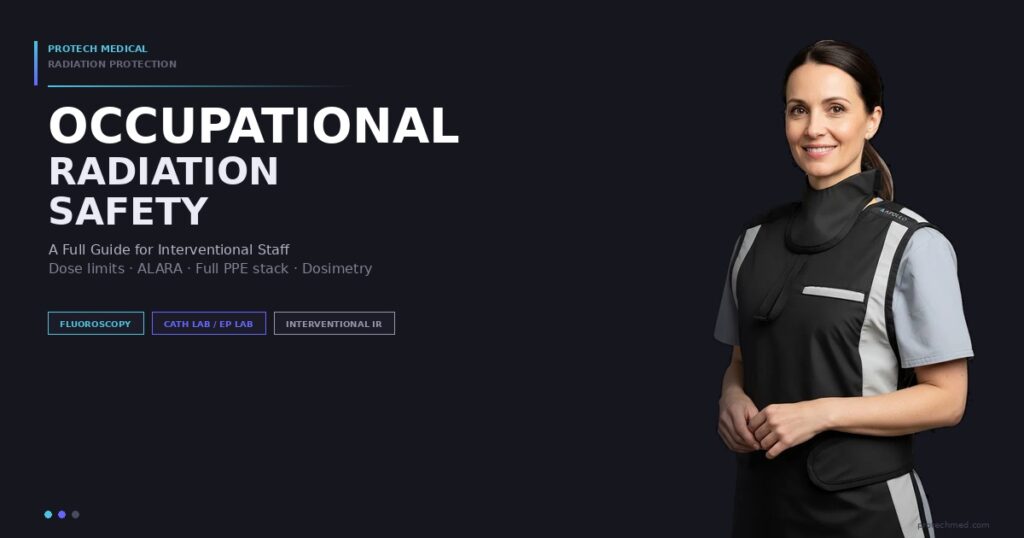
Research supports wearing both together as a system. When used in combination with a lead apron, you’ll get effective attenuation up to 99% at 0.50mm LE.. For interventional radiology staff who are constantly near the primary beam, wearing both is not redundant or useless. For these professionals, it’s the standard of care that many occupational safety guidelines recommend.
Thyroid Shield Thickness: What is the Ideal Equivalency?
Lead equivalency refers to the overall protective value of the material used, expressed in millimeters of lead or other rare earth composites. While Thyroid collars are standardized at 0.35mm lead equivalency, Protech sets the standard to 0.50mm. Unlike torso aprons, we do not make thyroid collars in lighter 0.25 or 0.35mm options, because the neck sits close to scatter and warrants full protection.
The general guideline when picking is as follows:
- 0.35 mm lead equivalency is the standard specification for staff who are constantly in high-frequency imaging, including performing numerous imaging series daily and radiologic technologists working in interventional or fluoroscopy suites. With that said, Protech highly recommends 0.50mm as the minimum.
- Lightweight lead-free alternatives using rare-metal composites can meet the 0.5 mm equivalency while still being significantly lighter, improving user comfort over long sessions.
For all imaging settings, we recommend a 0.5 mm Pb equivalent given the cumulative annual exposure profile.
Thyroid Shields for Dental X-Ray Settings
Dental staff takes a high volume of X-rays, but the dose per image is very low, well below what radiology and interventional teams see. In practice, it’s rare to see dental staff in lead at all, and thyroid shielding here is usually optional rather than clinically necessary
Here are the three imaging modalities in dental practice that generate scatter in distinct ways:
Periapical X-rays: The beam is directed at a specific tooth and its surrounding bone. Scatter from the patient’s head, the tube housing, and the film holder travels everywhere. Any member positioning the tube or steadying the patient’s head is in scatter range at all times.
Bitewing X-rays: A horizontal beam is directed through the crown area of the posterior teeth. Scatter at the neck level of the operator is clinically relevant at typical working distances of less than 3 feet without a barrier.
Panoramic X-rays (OPG): The rotating tube head travels all around the patient’s skull, and while it might seem like the primary beam is fully contained, the scatter from the wide-arc sweep creates exposure risk for staff who are still in the room during the acquisition.
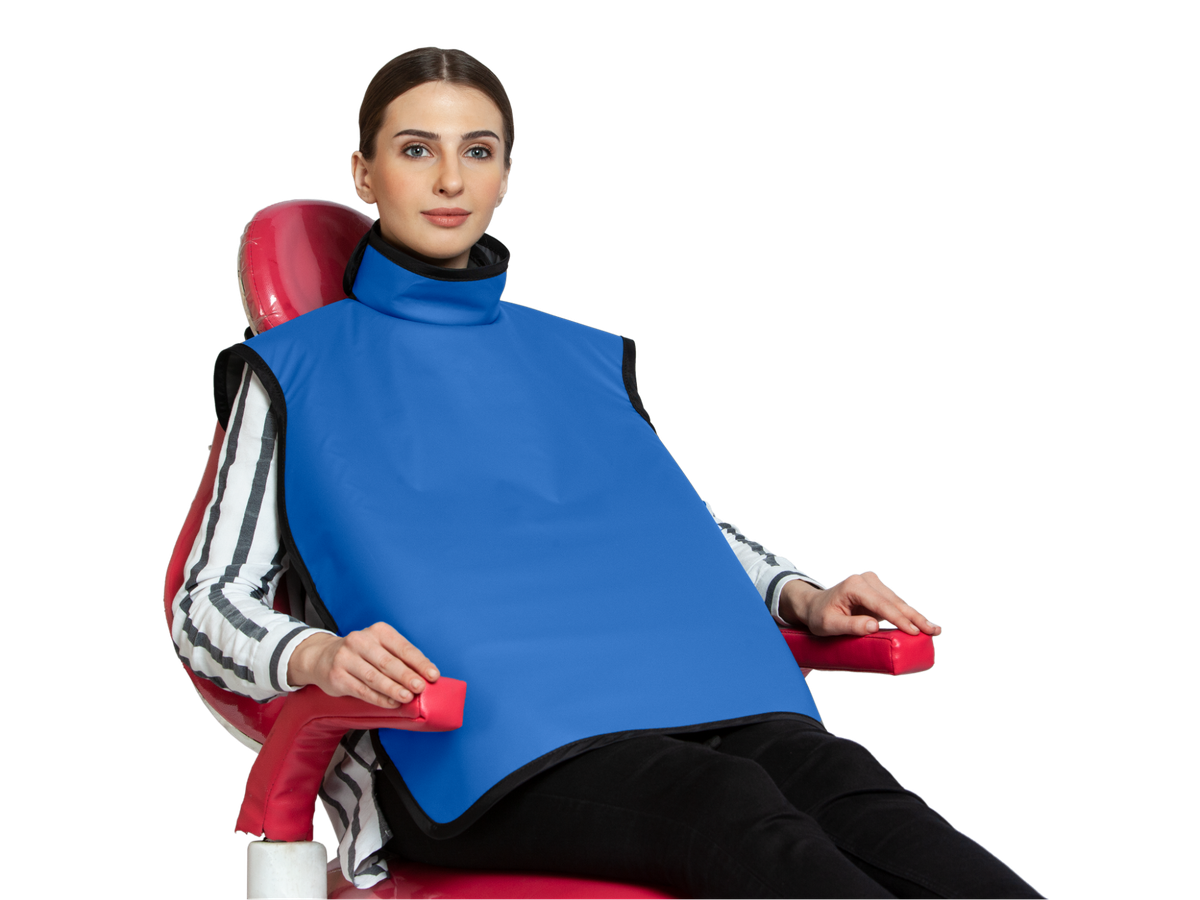
It’s also important to differentiate between staff shielding and patient shielding in dental settings. Both are relevant depending on the situation. Patients, especially children and younger adults, should be offered thyroid shields for dental X-ray procedures. Pediatric patients benefit most from this due to their higher tissue radiosensitivity.
Thyroid Shields for Radiology Departments
In hospital and outpatient radiology settings, thyroid protection requirements vary significantly, mainly due to the modality and the procedure type. Understanding where thyroid exposure is an actual risk can help departments determine where they should allocate proper protective equipment.
Fluoroscopy and Interventional Radiology: Carry the highest occupational thyroid exposure risk of any imaging environment. During prolonged procedures, the operator may be required to stand within 3 feet of the primary beam for extended periods. Scatter at the operator’s neck height can be significant, and lead-equivalent thyroid collars are mandatory PPE in almost all interventional suites.
C-Arm Imaging: It’s used extensively in orthopaedic theatres, urology, and emergency departments, and generates substantial scatter. For urology procedures in particular, thyroid shields form a key part of personal protection alongside other key parts such as an apron and lead glasses.
General Diagnostic Radiography: Plain film chest X-rays, extremity studies, and similar procedures result in considerably lower occupational scatter exposure, especially when staff are able to stand behind a barrier mid-procedure. However, in rooms without barriers, or where radiographers need to remain in the room during acquisition with paediatric or non-cooperative patients, wearing a thyroid shield is a low-cost and highly effective additional safeguard.
Department managers reviewing occupational radiation safety programs should ensure that thyroid shields are assigned individually to each member and that each thyroid shield is properly inspected for cracks or other damage.
Frequently Asked Questions: X-Ray Thyroid Shields
Should dental hygienists wear thyroid shields? It’s optional. Dental X-ray doses are very low, so the cumulative thyroid dose for hygienists stays minimal, far below what interventional or fluoroscopy staff face. A 0.5mm collar doesn’t hurt, and some choose to wear one in high-volume practices, but it’s rarely a clinical necessity.
What thickness thyroid shield do I need for dental X-rays? 0.35mm lead equivalency is the standard for thyroid collars, but we highly recommend 0.50mm LE as it’s the right choice across dental and high-frequency imaging alike. The additional attenuation is particularly valuable when performing multiple imaging series per day or working in close proximity to the tube head.
Is a thyroid collar the same as a thyroid shield? Yes. The terms are used interchangeably in clinical and manufacturer literature. Both refer to the protective wrap worn around the neck during X-ray imaging. Some manufacturers use "collar" to describe versions that attach to a lead apron via a lanyard and "shield" for freestanding versions with their own closure, but there is no functional clinical distinction. The key specification to check is always lead equivalency.
Do patients need thyroid shields for dental X-rays? Guidelines on patient thyroid shielding for dental X-rays have evolved in recent years. Some professional bodies have moved away from routine patient shielding for standard dental radiography due to very low doses involved and evidence that shields can interfere with image quality or require retakes. However, thyroid shields remain appropriate for paediatric patients, patients who are or may be pregnant, and patients who request them. Clinical practices should refer to current local regulatory and professional body guidance when establishing patient shielding protocols.
How long does a thyroid shield last? Most lead thyroid shields have a recommended service life of five years under normal clinical use, though this varies by manufacturer and usage intensity. Shields should be inspected annually using fluoroscopy or a light box to identify cracks, holes, or lead separation. Any shield showing visible damage should be removed from service immediately, regardless of age.

Let's talk Protech-tion |
Or call 561.627.9769 to get started.
Protecting What Matters Most With Protech Medical
What separates good radiation protection from exceptional radiation protection is consistency. A high-quality thyroid shield worn consistently offers the protection your staff needs. One left on a hook due to it being uncomfortable or not worth using delivers none at all. That is why fit, comfort, and smart design matter just as much as lead equivalency.
Protech Medical manufactures high-quality thyroid shields for clinical procedures where imaging is constant. Our Proguard thyroid collar is available in 0.5 mm lead equivalency, with both lead and lightweight lead-free options that maintain full attenuation performance while reducing weight fatigue.
For dental practices and radiology departments alike, our products cover the full protection picture, from staff thyroid collars and lead aprons to pediatric patient shielding.
Thyroid protection can be simple, proven, and available at any time. Contact us and talk to our team for more information on what products are ideal for your department.