Radiation Protection Equipment:
Full PPE Checklist for Radiology Teams
Key Takeaways
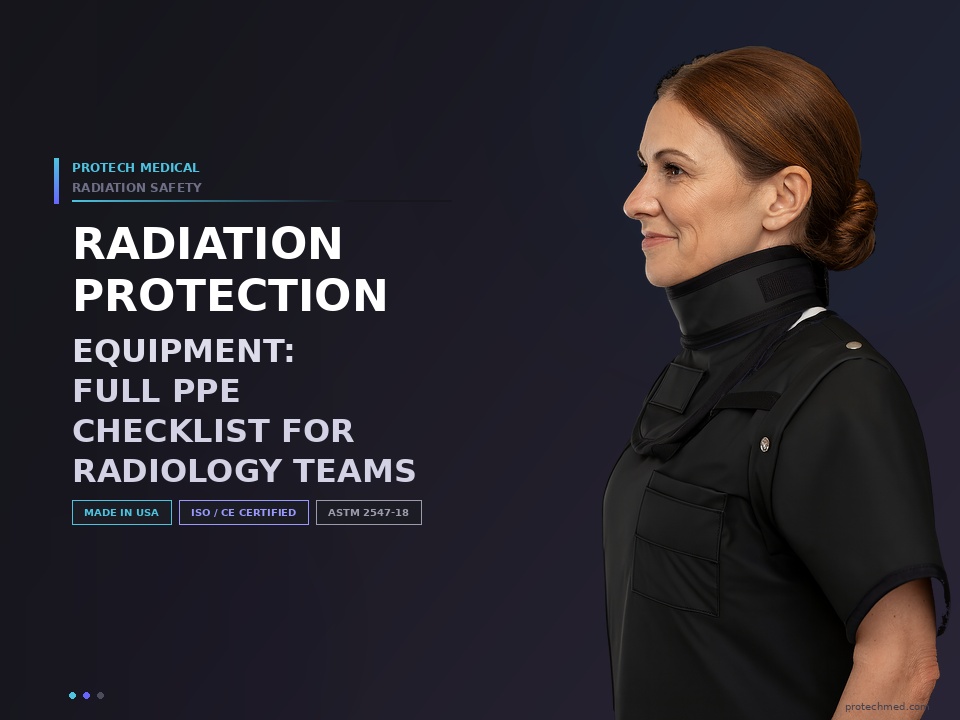
- Most radiology departments own lead aprons, but are missing a complete PPE system. Thyroid collars, lead glasses, radiation gloves, and barriers each address exposure pathways that the apron does not cover.
- The ICRP occupational dose limits are 20 mSv per year for whole-body exposure and 20 mSv per year for the lens. A lead apron alone addresses neither limit comprehensively; a complete system is required to meet both consistently across all exposure pathways.
- The minimum clinically appropriate PPE for fluoroscopy is a lead apron, thyroid collar, and lead glasses. For interventional fluoroscopy, radiation-attenuating gloves are also required.
- The protection level should match the procedure type. 0.5mm Pb for high-dose interventional environments. 0.35mm for general fluoroscopy and mixed workloads. 0.25mm only for low-dose, brief-exposure settings or if musculoskeletal health is an issue .
Every radiology department owns lead aprons. It’s the standard, and it’s the bare minimum recommended. But not all of these departments have a complete radiation protection system.
If you walk through different imaging departments, there's a good chance they will have their own lead aprons, but then they don’t follow thyroid collar regulations as they should. You’ll see interventionalists not using lead glasses despite having prolonged procedures. You’ll see a lack of radiation attenuating gloves in cath labs where hand dose can double the body dose recorded on a torso dosimeter. You’ll see zero use of barriers in rooms where a mobile lead screen would drastically reduce exposure in an instant.
Yes, a lead apron is the bare minimum, but you shouldn’t stop there when it comes to proper radiation protection.
Below, we created a simple checklist so you can audit your department, specify what you’re missing, and build a procurement record that holds up to any accreditation review.
The Complete Radiology Checklist
The table below goes over all of the items that complete a radiation system for clinical radiology based on the IEC 61331-1:2014 and IEC 61331-3:2014 standards. It’s important to note that the ASTM F2547-18 standard (USA) currently does not establish minimum protection requirements. Protection requirements will vary greatly depending upon your location. Please check with your local facility, state or country's requirements before purchasing PPE.
| PPE Item | Minimum Spec | Recommended Specs | Notes |
| Lead Apron (Frontal) | 0.25mm LE frontal | 0.35mm LE, Flexback, Nano or lead-free composite protective material | Make sure to always match the spec to your procedure. Styles like the Flexback provide additional support for the wearer. |
| Lead Apron (Full Protection) | 0.35mm LE | 0.35mm LE | Make sure to always match the spec to your procedure. Vest-skirts are ideal for prolonged use. |
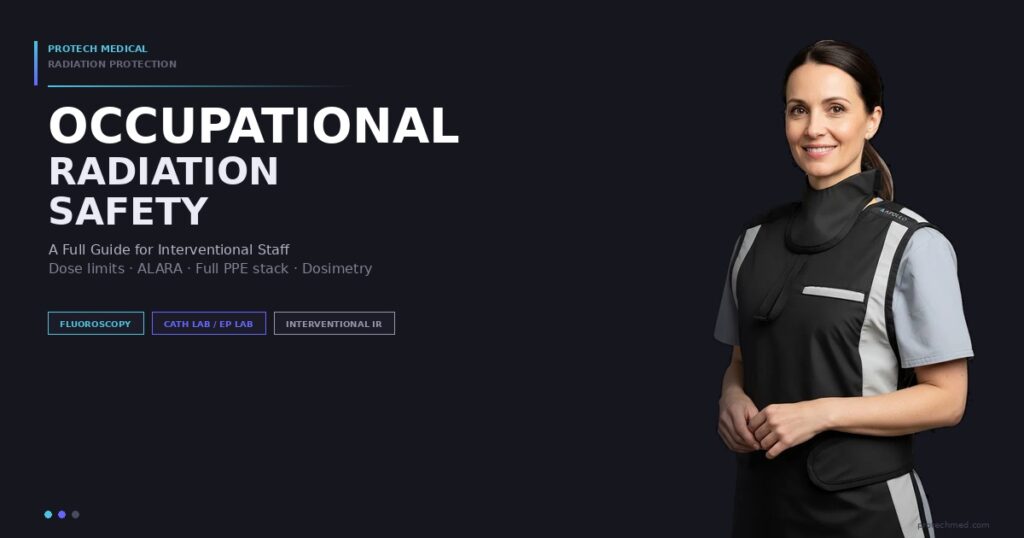
| Thyroid Collar | 0.35mm LE, any style | 0.5mm Pb, Original or visor style, magnetic closure | Worn snug with no gap. Reduces thyroid dose by up to 99% when properly fitted. |
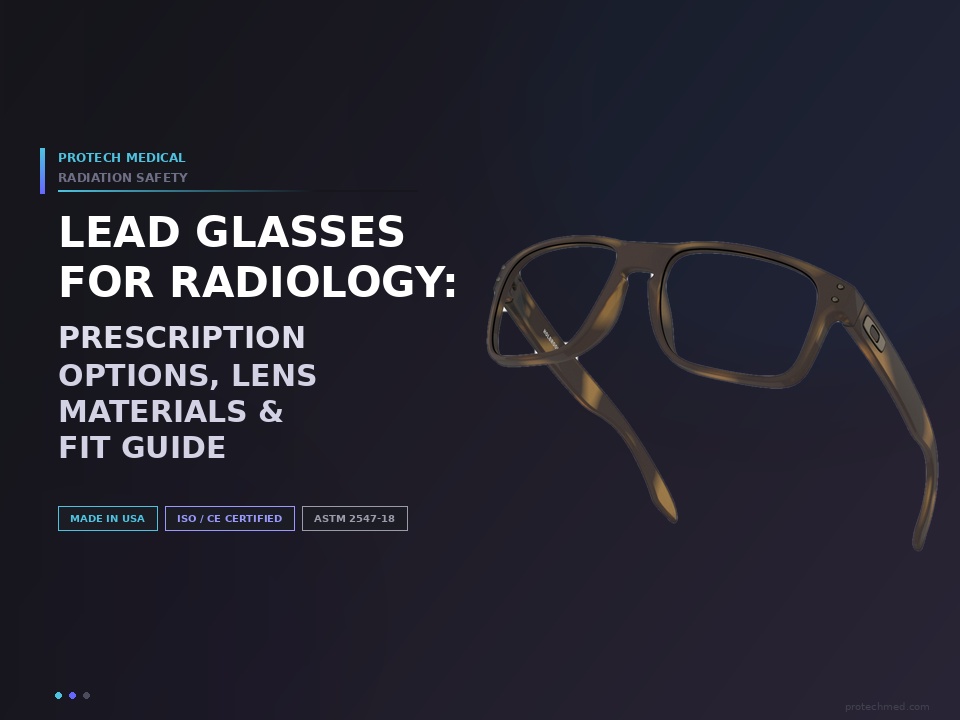
| Lead Glasses | 0.5mm LE, wraparound | 0.75mm Pb lead glass, full wraparound with 0.50mm side shields | Critical for interventional staff. Reduces up to 95% of overall eye dose when properly fitted. |
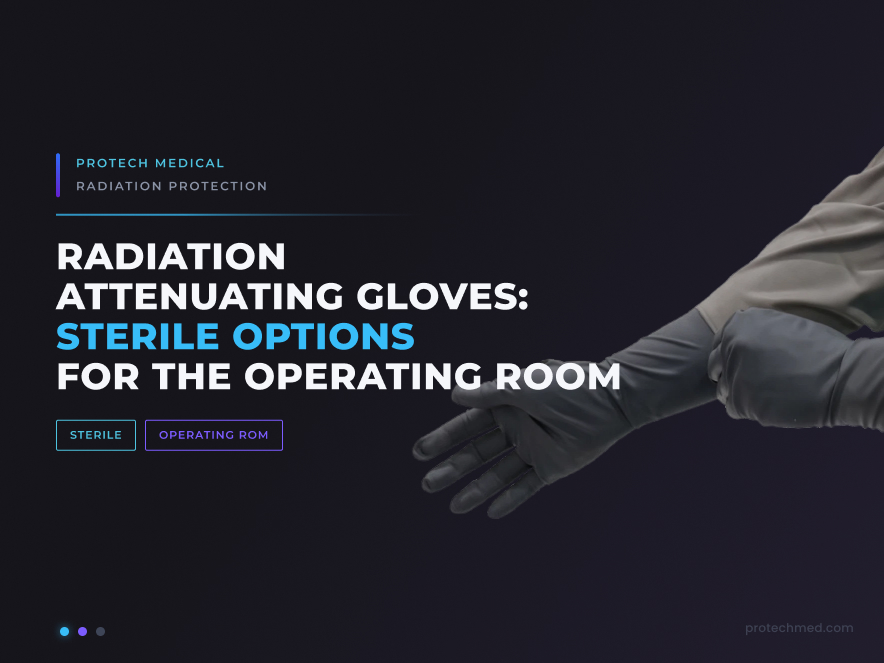
| Radiation Gloves | 0.25mm LE | Proguard RR or Elite, sterile and latex-free | Hand dose can quickly exceed body dose by 4x during fluoroscopy. |
| Table Drapes | Optional, but highly recommended. | 0.50mm LE double-sided table drape | Source-side shielding reduces occupational dose without adding weight to staff. |
| Mobile Barriers | N/A | Full height lead glass or acrylic mobile barrier | Amazing additional protection for observers. |
| Lead Accessories | 0.25mm LE | Optional but recommended for high-scatter interventional environments | Surgical caps, shin guards, etc. reduce scatter for OR and IR staff not in the direct beam line. |
Lead Apron Buying Guide: What to Specify
A lead apron is the foundation of any radiation PPE system, which means that knowing what to go for is vital.
Protection level
The protection level will determine how much attenuation your apron provides as well as its overall weight. A 0.5mm Pb apron will attenuate up to 99% of scatter radiation at diagnostic kVp levels, while a 0.35mm Pb apron will attenuate around 94% .
For high-dose environments, we always recommend a 0.5mm Pb apron due to the amount of scatter radiation you’re exposed to for long periods of time. The weight justifies the attenuation. For general diagnostic radiology and lower-scatter fluoroscopy, 0.35mm is appropriate while lowering the overall apron weight.
Style
A frontal apron is good for quick, low-scatter procedures where your back or sides are minimally exposed to radiation scatter. They are by far the lightest styles and should be used when completely sure that the procedures are quick and without having to move your torso to the sides or look back.
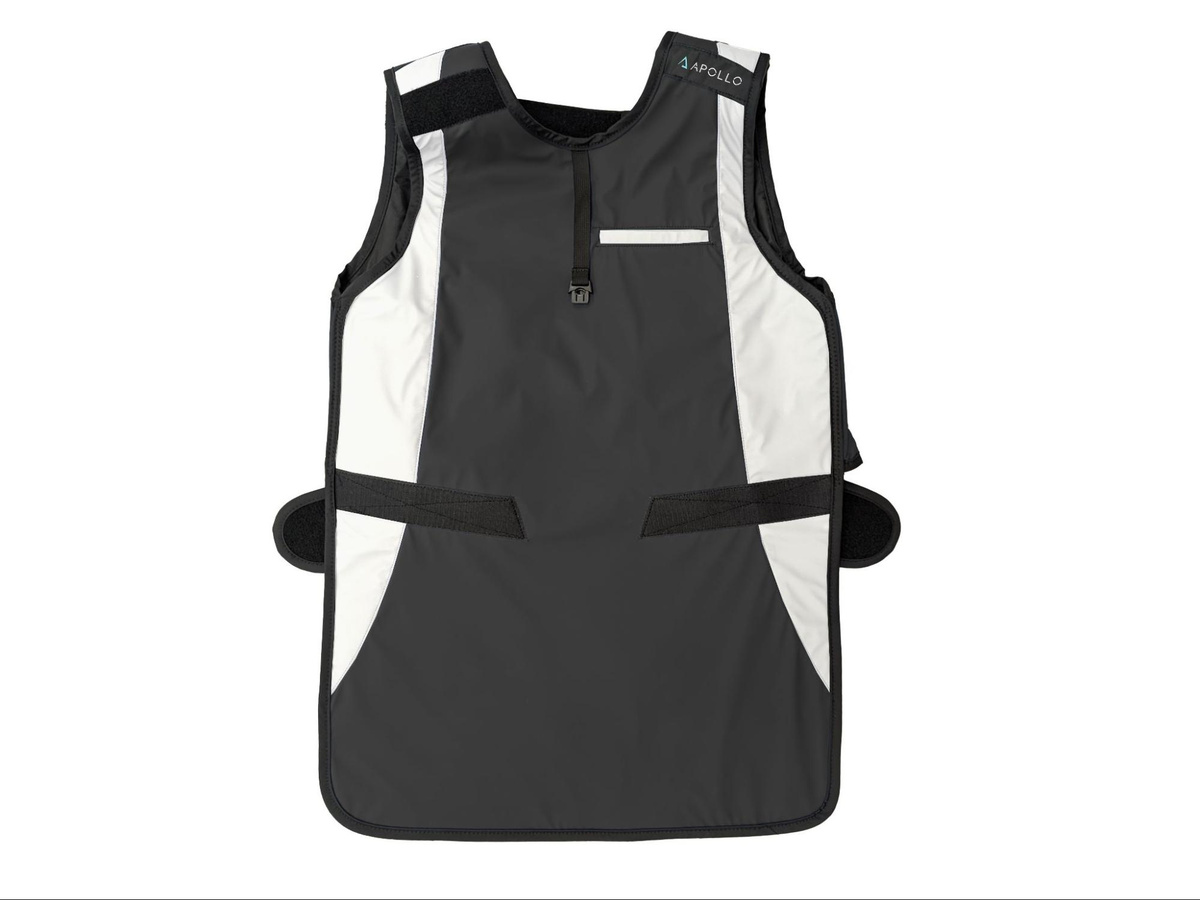
A vest-skirt or a two-piece system is the ideal choice for interventionalists and anyone who needs maximum protection in high-exposure environments. . A vest-skirt transfers 50-70% of the garment’s weight from the shoulders to the hips, which directly lowers the musculoskeletal loading that leads to common injuries.
A wraparound apron provides both front and back coverage for high-scatter environments where you are positioned at an angle to the beam. It helps ensure that no radiation scatter directly hits your sides or back.
Core Materials
Standard lead is still the benchmark and one of the most commonly used core materials on the market. lead composites can reduce weight by up to 15% over standard lead while still keeping attenuation at a similar level. Lead-free composites, typically blends of bismuth, antimony, tungsten, and rare-earth metals, deliver weight savings of around 15-34% over standard lead while typically being easier to dispose of at the end of life, and having a comparable attenuation across the 50-150 kVp range of most clinical procedures.
Protech’s Nano core material is currently the lightest option in clinical use, being up to 34% lighter than standard lead while still providing you with similar protection at key kV ranges (80-100kV). It is tested to the ASTM F2547-18 standard and is available across the full Proguard range. For departments needing aprons in 2026, Nano offers superior comfort for high-volume interventional environments where staff wear aprons for extended periods. See the Nano core material page for more information.
Custom vs Standard Sizing
Standard sizing is appropriate for departments/facilities with a large team, temporary roles, or where budget constraints make it difficult to order custom sizes for everyone. Our Apollo Quickship range ships within 24 hours across all standard adult configurations while offering the same attenuation that our custom sizes provide.
Custom size garments are built to each person’s unique measurements and are ideal for all medical staff who are constantly in procedures using fluoroscopy.
PPE Checklist by Speciality
There isn’t a one-size-fits-all checklist for radiology environments. Each one has its specific needs that should be addressed individually, so let’s go through each one.
Cardiac Catheterisation and Electrophysiology
Cardiac catheterisation has the highest occupational radiation exposure in a hospital. High fluoroscopy frame rates, extended beam-on time, and consistently being in close proximity to the primary beam combine to produce one of the biggest cumulative doses across all exposed body parts.
Top 3 PPE priorities:
- Lead Apron: 0.5 mm LE vest-skirt. For older doctors with musculoskeletal issues, opt for Nano or Premier core materials. Younger medical staff could use standard lead. . Extended use all day makes ergonomics a major factor.
- Lead Glasses: 0.75mm Pb glass, wraparound frames with side shields. (Strongly recommended for interventional staff).
- Radiation Gloves: Proguard RR or Elite. Hand dose during cath lab procedures is generally higher than body dose.
Additional Items: Ceiling-suspended lead barrier, thyroid collar, and scatterguard drapes.
Interventional Radiology
This has constant extended procedures, high scatter, variable beam geometry, and the staff is often positioned at different angles relative to the primary beam.
Top 3 PPE priorities:
- Lead Apron: 0.5mm LE wraparound or vest-skirt for extended procedures.
- Thyroid Collar: Proguard, Visor Original style. Consider a sewn-in option. Ensure fit is snug.
- Lead Glasses: 0.75mm Pb with side shields. Prescription strongly recommended if needed.
Orthopaedic, Vascular, and Trauma OR
Intermittent but unpredictable C-arm use during complex operative cases. OR staff are present for extended shifts, but beam-on time varies widely.
Top 3 PPE priorities:
- Lead Apron: 0.5mm LE. A lightweight core material is preferred due to extended shifts.
- Thyroid Collar: Original or Visor styles.
- Scatterguard Drapes: scatter reduction for OR staff not in the direct beam line.
Additional items: Lead glasses for scrub staff and primary surgeons during fluoroscopy.
Dental
Lowest scatter and the shortest beam-on time. The main priority here is compliance and comfort over maximum attenuation.
Top 2 PPE priorities:
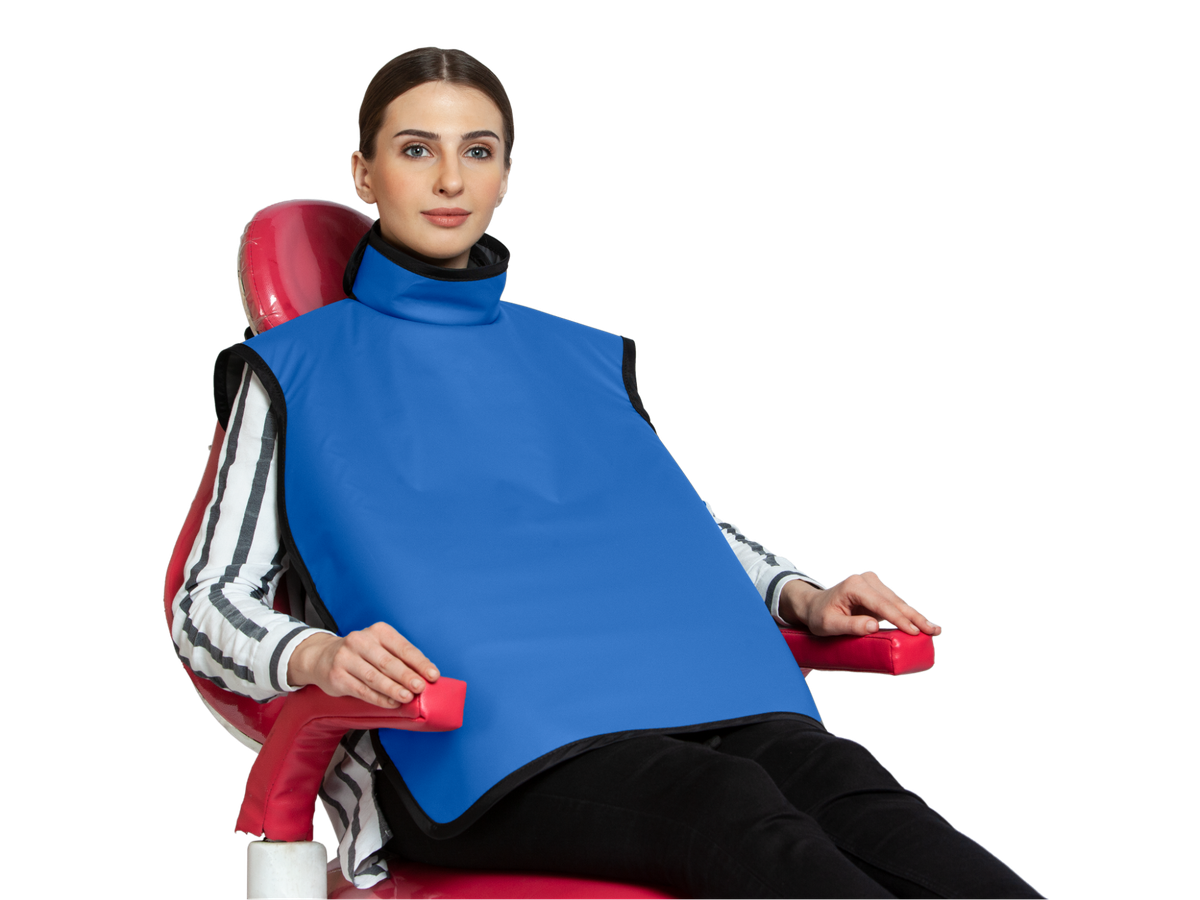
- Lead Aprons: 0.30mm Pb, frontal. Weight and compliance take priority in this setting.
- Thyroid collar: Generally not used in dental settings.
Additional items: Lead glasses can be appropriate for radiographers with increased patient volume every day.
Radiation Protection Accessories: Items Most Departments Forget
Beyond the main PPE set, there are items that address unique exposure risks that are generally overlooked in many departments.
Patient and Table Drapes: radiation table drapes are source-side shielding. This means that they reduce the radiation scatter directly at the source without having to add any sort of weight to their personal PPE.Table drapes address under-table scatter, a source of exposure often overlooked for staff working in long procedures.Scatterguard Patient Drapes are disposable, sterile, scatter radiation drapes that are placed over the patient during procedures and can attenuate scatter radiation by up to 97%.
Mobile Barriers and Barrier Systems: Mobile lead barriers provide excellent protection for medical personnel that are observing procedures at a distance. A full-height, lead glass mobile barrier in a cath lab can reduce dose to staff and nurses who need to stay in the room during beam-on time.
Head Caps: These are mainly used in OR and high-scatter environments where staff have to stay present for C-arm or fluoroscopic procedures while remaining outside the direct-beam line. Proguard surgical caps help by providing cranial scatter attenuation.
Apron Storage Racks: A storage rack won’t necessarily improve your comfort mid-procedure, but it’s an investment that improves apron longevity. Aprons that are stored incorrectly, such as folded, draped over chairs, or even worse, left on the floor, will reduce the lifespan of the apron itself by cracking the internal shields. Properly storing aprons helps them last significantly longer, and they will pass their annual inspections a lot more consistently.
Apron Duffle Bags: For traveling nurses and clinicians who own their apron and move between facilities, a padded duffle protects the garment in transit and keeps it from being folded or crushed.
Corset Belt: This accessory doesn’t directly affect radiation protection, but it’s important since it helps provide weight relief when on long shifts. A staff member developing musculoskeletal problems from apron wear can lead to bigger issues down the line and a potential early retirement to avoid further injuries.
FAQ: Radiation Protection Equipment for Radiology
What PPE is required for radiology? The minimum PPE for any staff member working within the scatter range of an X-ray or fluoroscopy source is a lead apron and a dosimeter. For fluoroscopy and interventional radiology, where scatter dose, beam-on time, and proximity are all significantly higher than diagnostic imaging, the appropriate standard is a complete PPE set: lead apron, thyroid collar, lead glasses, radiation gloves (for surgeons), and a dosimeter at both waist and collar level. The ICRP occupational dose limits, 20 mSv/year whole body, 20 mSv/year lens, require a full system to be met consistently across all exposure pathways.
How often should radiation protection equipment be inspected or replaced? The Joint Commission requires annual radiographic or fluoroscopic inspection of all lead aprons. The same interval applies to thyroid collars and other shielding accessories. Lead glasses should be inspected annually for lens clarity and frame integrity. Any item showing visible cracking, delamination, bubbling, or optical distortion should be taken out of service immediately, regardless of inspection schedule. Properly stored and maintained aprons typically last 5–10 years.
What is the minimum PPE for fluoroscopy? The IEC regulatory minimum for fluoroscopy is a 0.35mm Pb equivalent lead apron and a dosimeter. The clinically appropriate minimum, reflecting current ICRP guidance and the documented occupational risks of fluoroscopic work, is a lead apron at 0.35–0.5mm Pb, depending on procedure type, a thyroid collar, and lead glasses. For interventional fluoroscopy, radiation attenuating gloves and head caps should also be considered standard.
Can I get all my radiation protection from one supplier? Yes. Protech Medical supplies the complete radiation protection system, lead aprons, thyroid collars, lead glasses, radiation attenuating gloves, barriers, table drapes, Scatterguard caps, shin guards, storage racks, and apron duffle bags, along with AVA inventory tracking software for ongoing compliance management. Consolidating procurement through a single supplier simplifies ordering, ensures product compatibility across the full protection portfolio , and means all items are covered under the same warranty and inspection support.
How do I build a radiation protection programme for a new department? Start by checking which standards apply to your area (ASTM or IEC). Then check for any facility-specific protection requirements. Then, review the checklist table at the top of this article. Map each item to your department's specific procedure profile using the speciality checklists above. Specify protection levels to match your highest-exposure environment. Order custom-sized aprons for full-time interventional staff and standard Quickship sizes for intermittent users. Implement an inventory tracking system before the first apron goes into service; retroactively applying tracking to an existing inventory is significantly more time-consuming than starting with a system in place.

Let's talk Protech-tion |
Or call 561.627.9769 to get started.
A Complete PPE System Should Be Your Standard
Most radiology departments are still missing at least one or two items before having their staff fully protected. Protech Medical provides you with all of the radiation protection equipment that you need. Our Proguard lead aprons, thyroid collars, lead glasses, lead gloves, and mobile barriers are all easy to track using our AVA inventory system to ensure your whole system is compliant.
If your department’s PPE inventory does not match the checklist provided in this article, then it’s time to change that.
Contact us for more information on radiation protection equipment.