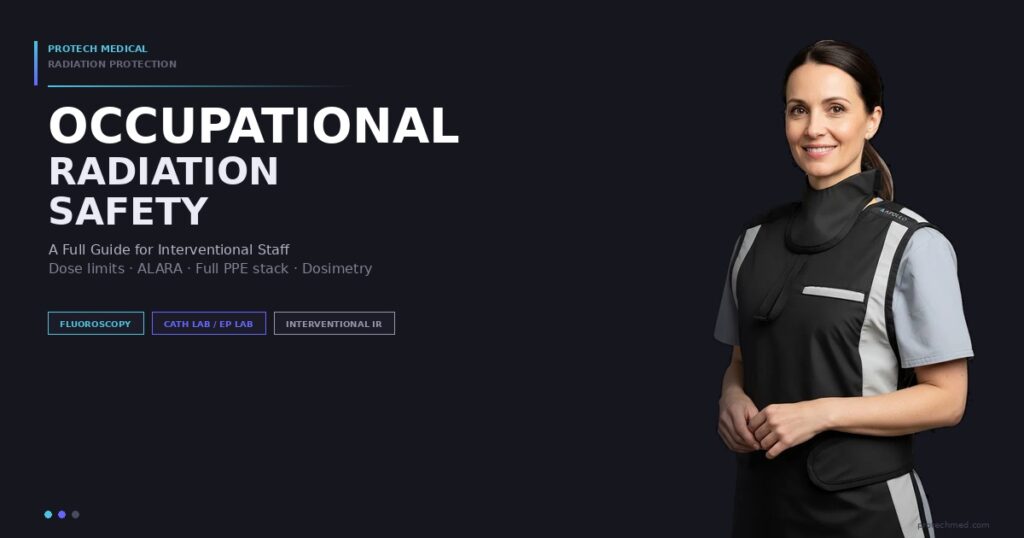
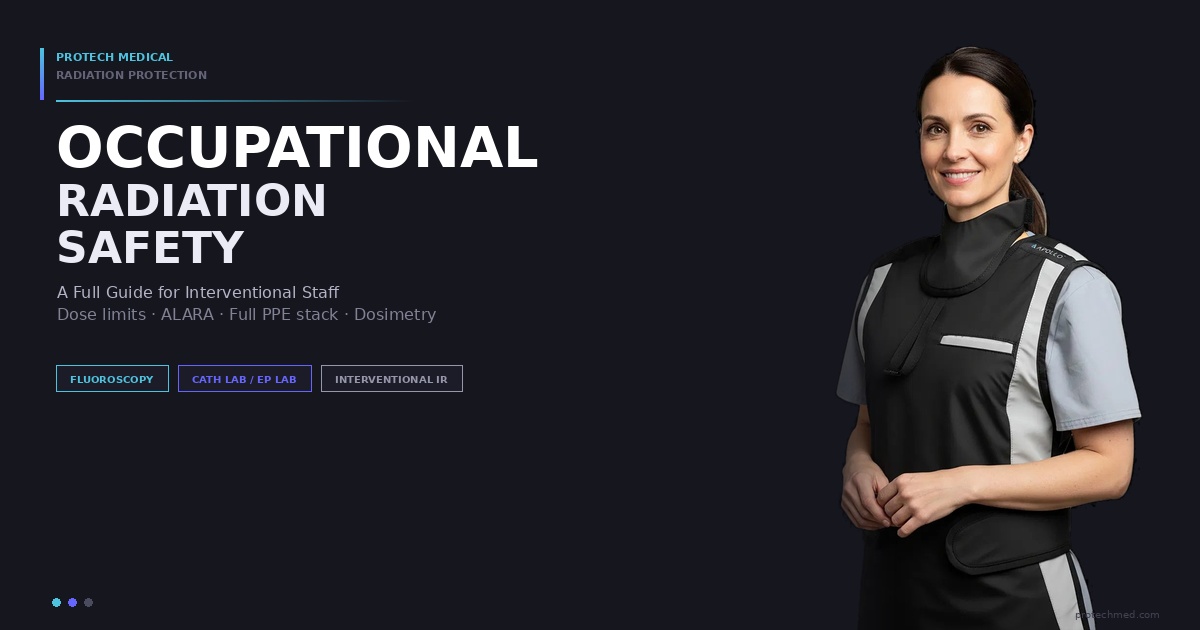
Occupational Radiation Safety —
A Full Guide for Interventional Staff
Key Takeaways
- Fluoroscopy accounts for the largest share of occupational radiation exposure in healthcare. Interventional cardiologists, electrophysiologists, interventional radiologists, urologists, and vascular surgeons carry the highest cumulative occupational dose of any clinical group.
- The ICRP occupational whole-body dose limit is 20 mSv per year, averaged over five years, with no single year exceeding 50 mSv. The lens dose limit is also 20 mSv per year, reduced in 2011 from 150 mSv. The extremity dose limit is 500 mSv per year.
- ALARA is not just a regulatory concept. It is an active practice obligation. The three classical principles are time, distance, and shielding. In the interventional suite, all three must be applied simultaneously, not selectively.
Fluoroscopy accounts for the largest share of occupational radiation exposure in healthcare. Interventional cardiologists, electrophysiologists, interventional radiologists, urologists, and vascular surgeons spend way more time exposed to radiation scatter than any other clinical group.
This means that the cumulative occupational dose they receive over their career is not trivial, and handling radiation exposure poorly can have serious consequences.
Approximately 50% of interventional radiologists and cath lab cardiologists develop clinically significant musculoskeletal problems throughout their careers, mainly due to the weight of the gear they have to wear daily.
Occupational radiation safety in interventional settings is not just about keeping dose below regulatory limits; it’s about building a sustainable working environment that protects staff across every dimension of their occupational exposure.
This guide goes over everything both interventional staff and their department need for radiation safety. Regulatory dose limits, ALARA principles applied to the specific realities of the interventional suite, dosimetry and monitoring programmes, the full PPE stack and how to use it as a system, and guidance for where radiation scatter is the highest.
Understanding Radiation Dose Limits for Healthcare Workers
Occupational dose limits for healthcare workers are set by the International Commission on Radiological Protection and incorporated into national regulatory frameworks in most countries. Understanding what these limits cover, how they are measured, and how interventional staff exposure compares to these limits is vital for any radiation safety programme.
Whole-Body Dose Limit
The ICRP occupational whole-body effective dose limit is 20 mSv per year, averaged over five consecutive years, with no single year exceeding 50 mSv. This limit is directly applied to the whole-body effective dose. Essentially, for interventional staff, this is the limit that whole-body dosimetry programs are designed to adhere to and ensure protection.
The 20 mSv annual average is not supposed to be used as a safe level of exposure; it’s a threshold above which the occupational risk is not allowed relative to the benefits of the work being done.
The ALARA principle requires active effort from the staff and their respective departments to keep doses well below these limits, not just to stay slightly under it.
Lens Dose Limit: 20 mSv Per Year
The ICRP reduced the occupational lens dose limit from 150 mSv to 20 mSv per year in 2011 following clear evidence that radiation-induced lens opacification occurs at lower doses. This revision is an 85% reduction to the permitted limit and shows how radiosensitive eyes are and the importance of their protection, especially for interventional staff.
The lens limit is measured separately from the whole-body limit and requires dedicated eye dosimetry or a validated correlation method where whole-body badge data is used to estimate lens dose.
In high-scatter interventional environments, such as cardiac catheterization, EP lab, or complex IR procedures, the lens dose limit is easily achievable without protective eyewear in only a month if you’re busy.
Extremity Dose Limit: 500 mSv Per Year
The ICRP extremity dose limit for hands, forearms, feet, and ankles is 500 mSv per year. This limit is important mainly for interventional staff who have to constantly place their hands near the primary beam during the procedure. Hand dose during these types of procedures can be 4-10 times the body dose recorded on a torso dosimeter.
Pregnancy Considerations
For staff who are or may be pregnant, the equivalent dose limit to the embryo is set to 1 mSv for the whole duration of the declared pregnancy. Most radiation protection frameworks require them to instantly notify their employer on declaration of pregnancy, at which point a separate dosimeter is worn at waist level beneath the lead apron to estimate dose directly.
Most departments will prefer to reassign pregnant interventional staff to other non-fluoroscopic roles in their first trimester just for safety reasons, but it’s not required by regulation whatsoever.
ALARA Principles in Interventional Radiology
ALARA, or As Low As Reasonably Achievable, is not your conventional regulatory requirement. Instead, it’s a practice standard and an ongoing obligation to reduce radiation exposure to staff and patients to the lowest possible level that the department’s clinical tasks permit. ALARA operates through three classical principles: time, distance, and shielding.
Time
Minimizing beam-on time is by far one of the most important things an interventional operator can do. Every single second of reduced fluoroscopy time is a reduction in dose to everyone present in the procedure. Practical application can include: pulsed fluoroscopy rather than continuous, as long as image quality allows it; using the last-image hold function rather than repeated fluoroscopy when reviewing anatomy; minimizing cine acquisition to the shortest runs possible while still providing all the information needed for the procedure at hand; and avoiding fluoroscopy during periods of room repositioning when no diagnostic information is available.
In 2026, the complexity and duration of interventional cases have dramatically increased. This means that prioritizing time management is vital, especially for departments that constantly use radiation beams as part of their main procedures.
Distance
Radiation dose from a point source falls off with the square of the distance (the inverse-square law). Doubling the distance from the radiation source reduces the dose roughly by one quarter. For interventional staff, practical management includes: stepping back from the table during cine acquisition when direct access is not required; positioning the image intensifier as close to the patient as possible to reduce overall scatter; using extended exposure cords and remote control whenever possible; and standing on the image intensifier side of the table instead of on the x-ray tube side, where scatter is a lot higher. A practical rule of thumb is the six-foot rule: most scatter radiation is concentrated within about six feet of the emitter, so stepping back six feet or more when your hands are not needed at the table removes the bulk of that exposure.
Shielding
Shielding in the interventional suite operates at two different levels: both for personal use and structures. Structural shielding, such as lead-lined walls, ceiling-suspended lead barriers, table drapes, patient drapes and mobile lead barriers, reduces the ambient scatter that reaches staff in the room regardless of their PPE. Personal shielding, such as lead aprons, thyroid collars, lead glasses, and gloves, protect the person from scatter that reaches them directly.
The most important principle every interventional staff member needs to learn is that one item is never enough for full protection. A lead apron attenuates scatter radiation for your trunk only; for example, your thyroid, eyes, and hands are still fully exposed to radiation scatter
Radiation Monitoring: Dosimeters and Badge Programmes
Radiation monitoring is a regulatory requirement for all workers who are likely to receive over 1 mSv per year. For interventional staff, this threshold is easily exceeded, and monitoring is mandatory in all major regulatory frameworks.
Whole-Body Dosimetry
The standard monitoring instrument for whole-body effective dose is a thermoluminescent dosimeter or optically stimulated luminescent dosimeter worn at the level of the collar, outside the lead apron.
Wearing a dosimeter inside the apron produces a low reading that doesn’t reflect the unshielded dose received by the head, neck, and extremities. Wearing it at the collar outside the apron provides staff with the best estimate of whole-body effective dose, including the unshielded portions of the body.
For staff wearing lead aprons with thyroid collars, there are specific dual-badge protocols they can follow: one badge at the collar (outside the apron) and one at the waist (inside the apron, to estimate shielded trunk dose). A validated formula lets you combine both readings to estimate the effective dose accurately.
Ring Badge Monitoring
Ring badges are worn on the dominant hand during fluoroscopic procedures and provide easy extremity dose monitoring for staff whose hands constantly approach the primary beam. Ring badge monitoring is particularly relevant for interventional radiologists, vascular surgeons, and even some electrophysiology (EP) operators.
Programme Management and Reporting
A functioning dosimetry programme requires several things: consistent badge usage on every single procedure done throughout the day; regular badge exchange at the frequency specified by your dosimetry service provider (it’s either every month or every quarter); quick investigation of any reading that exceeds investigation levels set by your department’s radiation safety officer; and documented records retained for the period required by your regulatory jurisdiction. Staff report their readings to the department’s Radiation Safety Officer (RSO) at each exchange. If a reading pushes someone past the monthly or quarterly limit the RSO has set, that person is pulled from fluoroscopic work until the next cycle, which in practice means time out of the OR. Staying well under the limits throughout the year is what keeps staff on the schedule.
The Joint Commission also requires full documented evidence that radiation protection equipment is inspected annually and is working properly. Protech’s AVA inventory tracking software seamlessly integrates inspection records with inventory management, producing the documentation necessary for full accreditation reviews.
Personal Protective Equipment: The Full Interventional PPE Stack
The PPE stack for interventional radiology doesn’t stop with just a lead apron. It’s a system of overlapping protections, each addressing a specific exposure area that others can’t cover by themselves.
Not using all of the items on this list is essentially creating protection that is systematically incomplete.
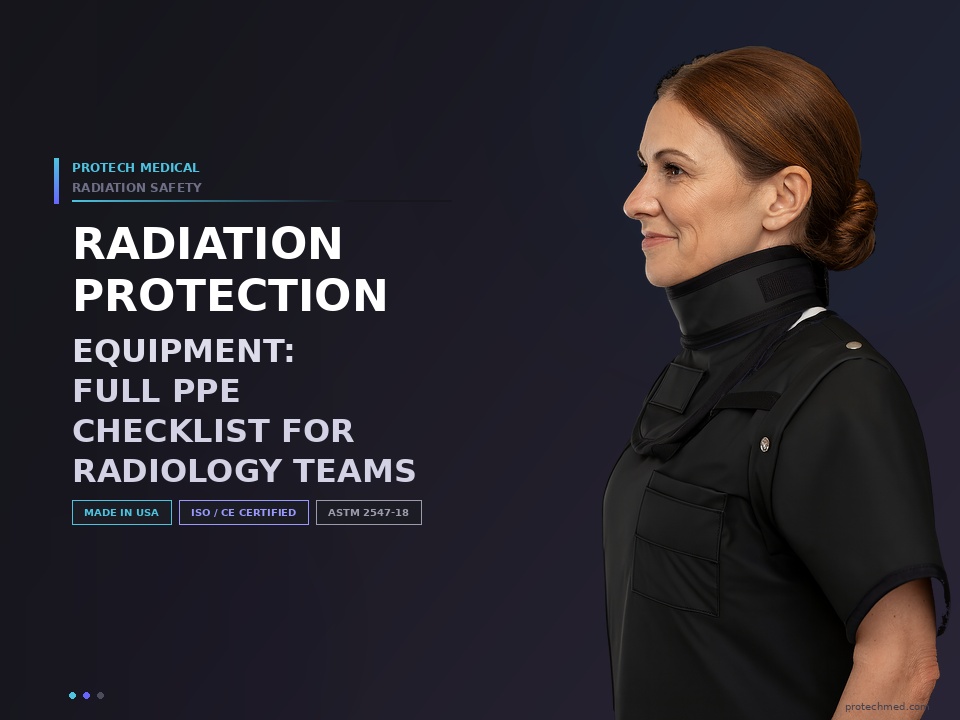
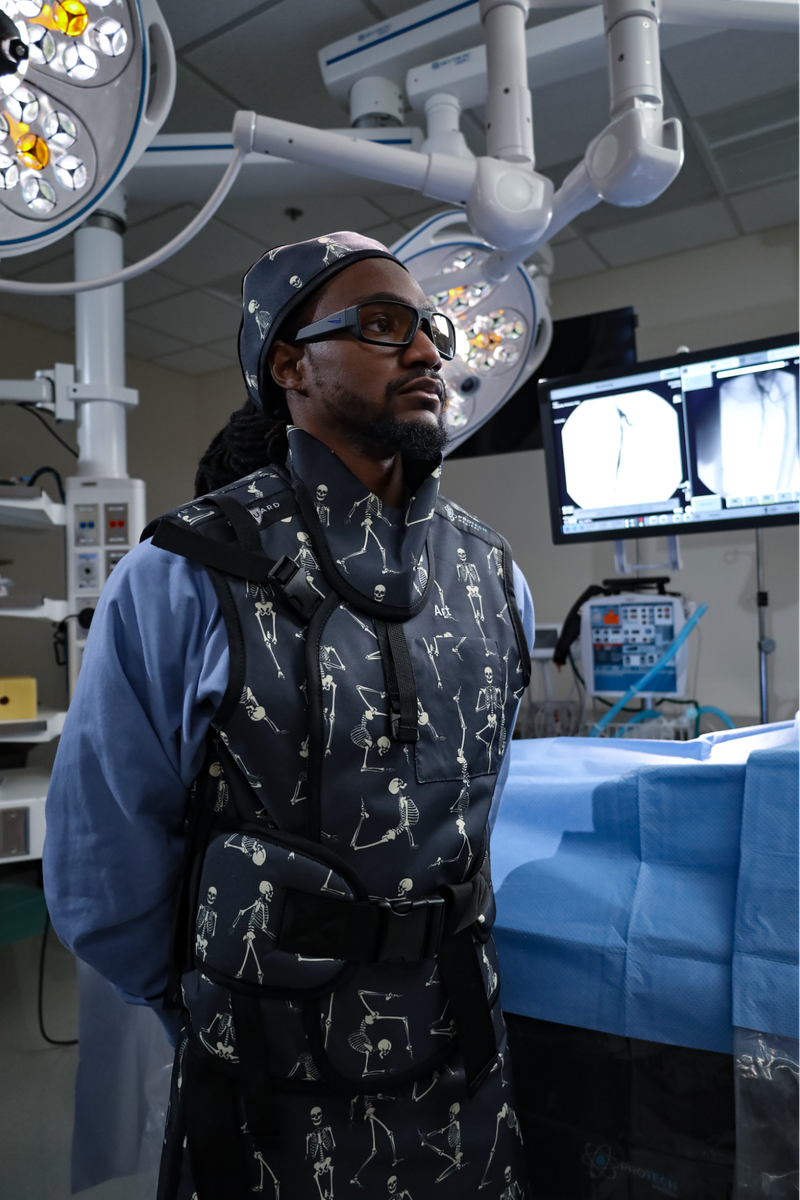
Lead aprons are the core of any PPE stack. They protect the trunk from scatter radiation at the primary exposure zone. For interventional procedures, 0.5mm Pb is highly recommended and often deemed mandatory by facilities . Choose comfortable apron styles, such as a vest-skirt or Wraparound Flexback styles, for staff who will be using lead aprons during most of their shift. These systems transfer around 50-70% of the weight from the shoulders to the hips, which helps address musculoskeletal load. It helps to be clear on coverage when choosing a style: a vest-skirt or wraparound apron gives full front-and-back protection, while a frontal apron covers the front only.
Thyroid collars are vital since the thyroid gland is one of the most radiosensitive organs in the body and sits right under the scatter field during fluoroscopy. A lead apron provides zero thyroid protection unless it has an integrated thyroid shield. When worn correctly, it reduces thyroid dose by approximately 2.5 times. For high-scatter interventional environments, the Proguard thyroid collar and Visor Thyroid Collar styles provide neck front and lateral protection in one product.
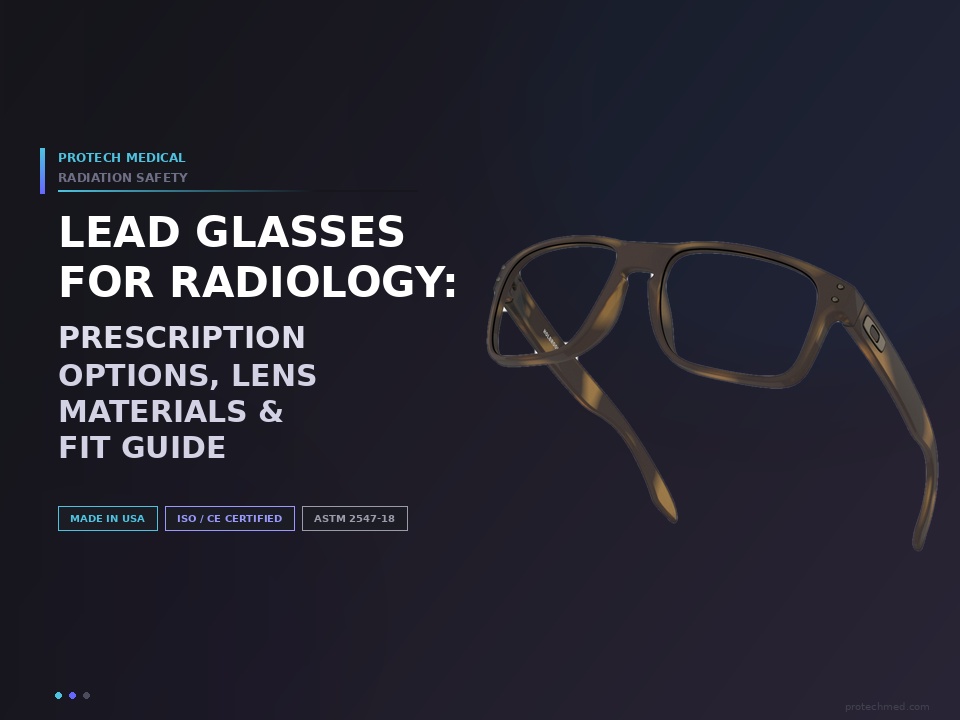
Lead glasses are a must for all interventional staff consistently in procedures due to the radiosensitivity of the eyes. The ICRP lens dose limit of 20 mSv per year can be easily exceeded in high-volume cath lab and EP lab settings without eye protection. Well-fitted wraparound lead glasses with side shields reduce eye dose by up to 95%.
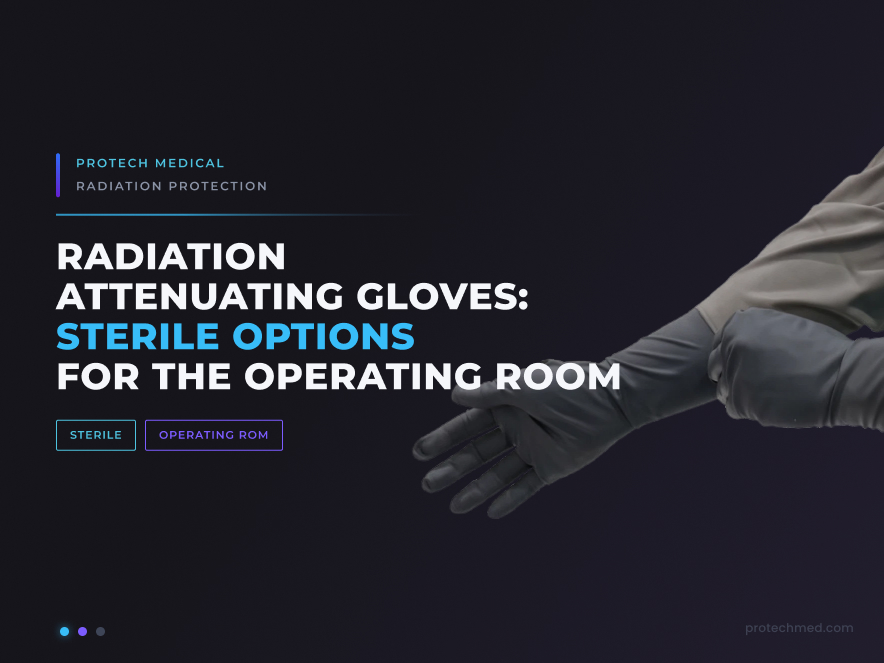
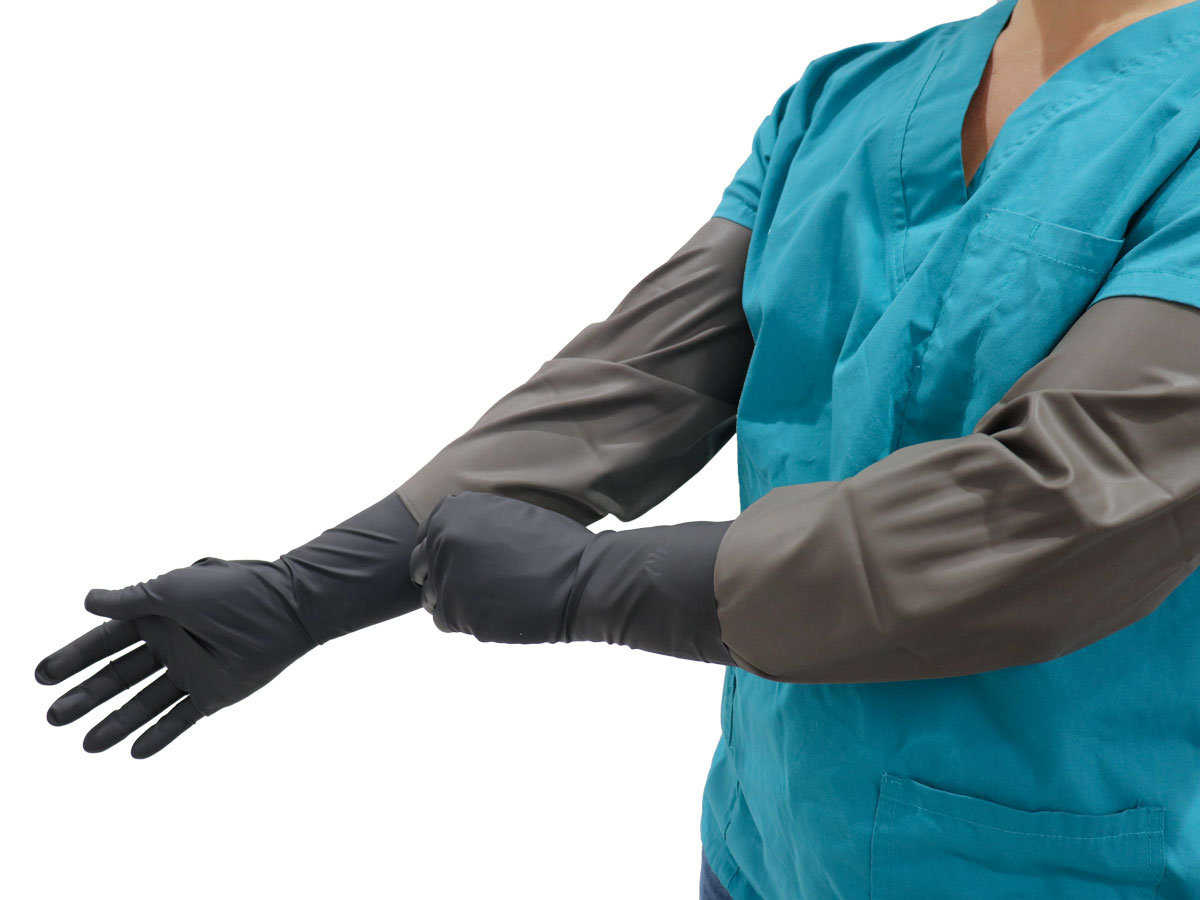
Radiation attenuating gloves are mandatory for most fluoroscopic procedures due to how much radiation scatter the hands get compared to the torso. For interventional radiologists who are constantly putting their hands near the primary beam as part of their procedures, radiation-attenuating gloves are necessary to avoid problems down the line. Our Proguard RR and Elite lines are latex-free with lead and lead-free options, both are sterile for OR use.
Patient and table drapes are a great way to reduce radiation scatter without adding extra weight to personal gear. Under-table scatter is addressed by radiation table drapes without impeding workflow or requiring cumbersome setup Patient drapes also target scatter at the source, but are placed atop the patient near the surgical site. These are generally overlooked in most interventional procedures, despite helping immensely with radiation scatter.
Mobile Barriers and Barrier Systems are also excellent options to reduce scatter radiation without added weight to medical staff. A ceiling-suspended lead barrier between the operator and the primary beam can provide significant dose reduction. Mobile barriers provide maximum protection for staff that are not needed near the table.
FAQ: Occupational Radiation Safety
What is the safe radiation dose for healthcare workers? There is no dose threshold below which radiation exposure is considered entirely without risk; the linear no-threshold model assumes that risk increases proportionally with dose even at very low levels. The ICRP occupational whole-body dose limit of 20 mSv per year averaged over five years represents the regulatory threshold above which the occupational risk is unacceptable relative to the benefit of the work. The ALARA principle requires active effort to keep dose well below this limit, not simply at or near it. For lens dose specifically, the limit is also 20 mSv per year, which interventional staff can approach without protective eyewear in a high-volume setting.
How do I reduce radiation exposure in the cath lab? The three most impactful interventions, in order of effect: use pulsed fluoroscopy rather than continuous; use a combination of table drapes, patient drapes and barrier systems to target radiation without added weight to staff; and wear the complete PPE stack, apron, thyroid collar, lead glasses, and gloves, on every case, not selectively. Step back during cine acquisition when possible. Position the image intensifier close to the patient to reduce scatter intensity. Stand on the intensifier side of the table rather than the X-ray tube side.
Is fluoroscopy dangerous for interventional staff? Fluoroscopy produces cumulative occupational radiation exposure that is associated with documented clinical risks, including radiation-induced cataract, thyroid exposure, and, at the career-level dose accumulations of high-volume interventional operators, a small but real increased risk of radiation-induced malignancy. These risks are manageable through consistent application of ALARA principles and correct use of the full PPE stack. The risks are not managed by minimizing awareness of them.
What PPE is required for interventional procedures? The regulatory minimum is a lead apron and a dosimeter. The clinically appropriate minimum for fluoroscopy-guided interventional procedures, reflecting current ICRP guidance and documented occupational risks, is a lead apron at 0.35–0.5mm Pb, a thyroid collar, lead glasses, a dosimeter at collar level, and, for angiographers and operators who place hands near the beam, radiation attenuating gloves. For high-dose interventional environments, a mobile lead barrier or table drape should also be considered standard.
How often does radiation protection equipment need to be inspected? The Joint Commission requires annual radiographic or fluoroscopic inspection of all lead aprons. The same annual interval applies to thyroid collars and other lead accessories. Lead glasses should be inspected for lens clarity and frame integrity annually; a scratched or cloudy lens transmits more radiation than a clear one. Any item showing visible delamination, cracking, or damage should be taken out of service immediately, regardless of the inspection schedule.

Let's talk Protech-tion |
Or call 561.627.9769 to get started.
Occupational Radiation Safety is a Career-Length Commitment
The dose limits should never be your goal; they should be your floor. For interventional staff spending decades working in a fluoroscopy suite, the difference between a good radiation safety programme and a broken one is measured in their thyroid health, lens clarity, and the spinal integrity preserved by ergonomic PPE.
Protech provides you with every single item that a complete PPE stack needs. The rest is wearing it correctly and consistently. Contact us for more information on our full range of products for your PPE stack.