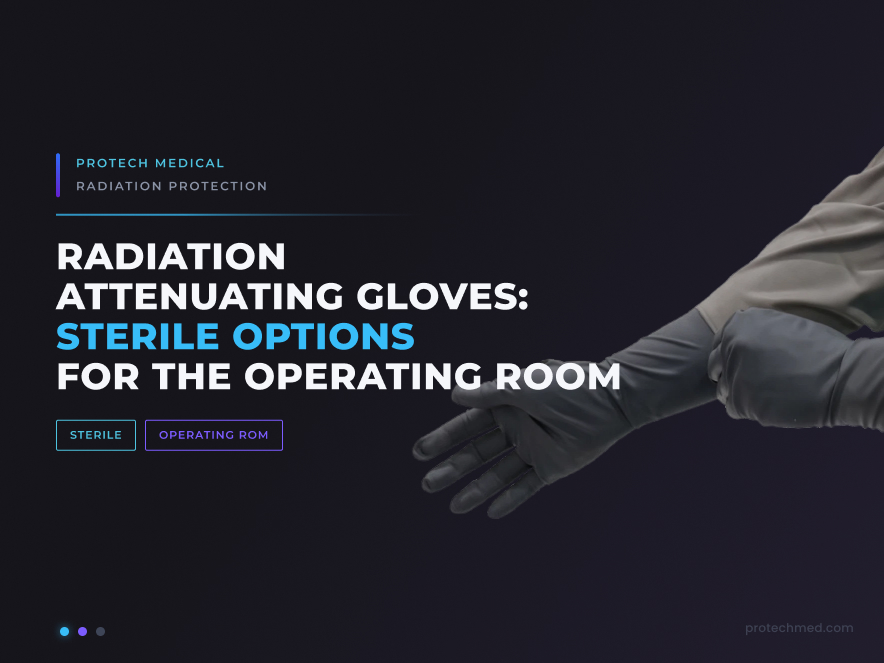
Radiation Attenuating Gloves:
Sterile Options for the Operating Room
Key Takeaways
- Surgeons' hands can receive up to 10 times the torso dose during fluoroscopy-guided procedures — the most undermanaged source of occupational radiation exposure in the OR.
- The ICRP extremity dose limit is 500 mSv per year, reachable in high-volume interventional practice for orthopaedic, vascular, cardiac, spinal, and urological surgeons.
- Patient Positioning gloves are non-sterile and cannot be used inside a sterile surgical field. They are typically used outside the OR during x-ray exams. Surgeons require purpose-designed sterile radiation attenuating gloves.
- Radiation attenuating gloves differ fundamentally from patient positioning gloves; they are thinner, more flexible, and built for operative dexterity while still reducing hand dose by 15 to 60percent.
- Glove procurement belongs inside a complete radiation PPE framework, and should not be treated as a standalone purchase.
During fluoroscopy-guided surgery, an operator’s hands can receive up to ten times more radiation dose than the torso receives under a lead apron. We have radiation protective gear for the thyroid gland, lead glasses for the eyes, and yet clinicians do not treat hand dose as seriously as they should.
Radiation-attenuating gloves are meant to change that, but not every lead glove belongs in the OR. Two very different products get grouped under the label "radiation gloves": thin, sterile attenuating gloves like Proguard that surgeons wear for the tactile sensitivity fine work requires, and heavier reusable positioning gloves like the angiography glove and slit mitt, which trade dexterity for maximum protection and suit tasks like holding a patient or animal still during imaging. Knowing which is which is what tells an OR team what can actually go inside the sterile field.
This is a simple-to-follow guide to radiation attenuating gloves for the operating room, why hand dose matters, what the sterile field distinction means in practice, how radiation attenuating gloves differ from traditional lead gloves for radiology, and how to match the right product to the right procedure.
Why Hand Radiation Dose Matters in Surgical Settings
Hand radiation exposure is one of the most undermanaged sources of occupational dose in interventional practice.
In any fluoroscopy-guided OR procedure, cardiac catheterization, urological stone surgery, and orthopaedic fracture fixation, the surgeon’s hands are constantly beside the C-arm beam and the patient. This means that their hands are in constant exposure to radiation scatter, no matter what.
By contrast, the torso has some distance between it and the beam while being fully protected, so why wouldn’t the hands need protection too? Scatter radiation for hands is significantly higher when compared to the torso dose when recorded on a dosimeter.
The International Commission on Radiological Protection (ICRP Publication 103) set the maximum occupational dose limit for extremities at 500 mSv per year, which is considerably higher than the 20 mSv the rest of the body has. Despite this, reaching 500 mSv with no protection is fairly easy to do.
The overall OR radiation safety infrastructure has clearly improved over the last two decades. But proper hand protection is still the missing piece, largely because of lingering concerns about dexterity.
Sterile vs Non-Sterile Radiation Gloves: What’s the Difference?
A sterile surgical field requires that every item entering it has been sterilized to surgical standards and packaged to maintain that sterility until the moment of use.
Angiography radiation protection gloves are non-sterile.They are made for use outside the operating room for patient positioning during imaging.
This means that introducing a non-sterile glove into the operative field is a sterility breach. This precludes the use of radiation glove products such as the Angio Mitt, Slit Mitt or angiography glove for any procedure where sterility is required.
For OR radiation protection, this distinction creates two different product needs. Outside the sterile field, such as for circulating nurses, radiographers, and anaesthetists radiation gloves aren’t typically needed.. Inside the sterile field, the requirement for sterile gear is mandatory. This means that each pair should be individually packaged, gamma-sterilized or EO-sterilized, must be opened at the scrub table using standard procedure, and worn either as the primary glove or over standard surgical gloves.
Sterile radiation attenuating gloves embed their shielding material within the glove structure itself rather than as a surface coating. This allows the sterilization process to maintain both product integrity and sterility.
The distinction is important because gloves with surface coating cannot be sterilized properly without degrading the shielding material.
When procuring for OR applications, sterility certifications and packaging standards should be verified before any other product specification.
Lead Gloves for Radiology vs Radiation Attenuating Gloves
The term “lead gloves” spans a wide product range, so knowing what makes a traditional radiology lead glove different from radiation attenuating gloves is vital before making any sort of procurement decision.
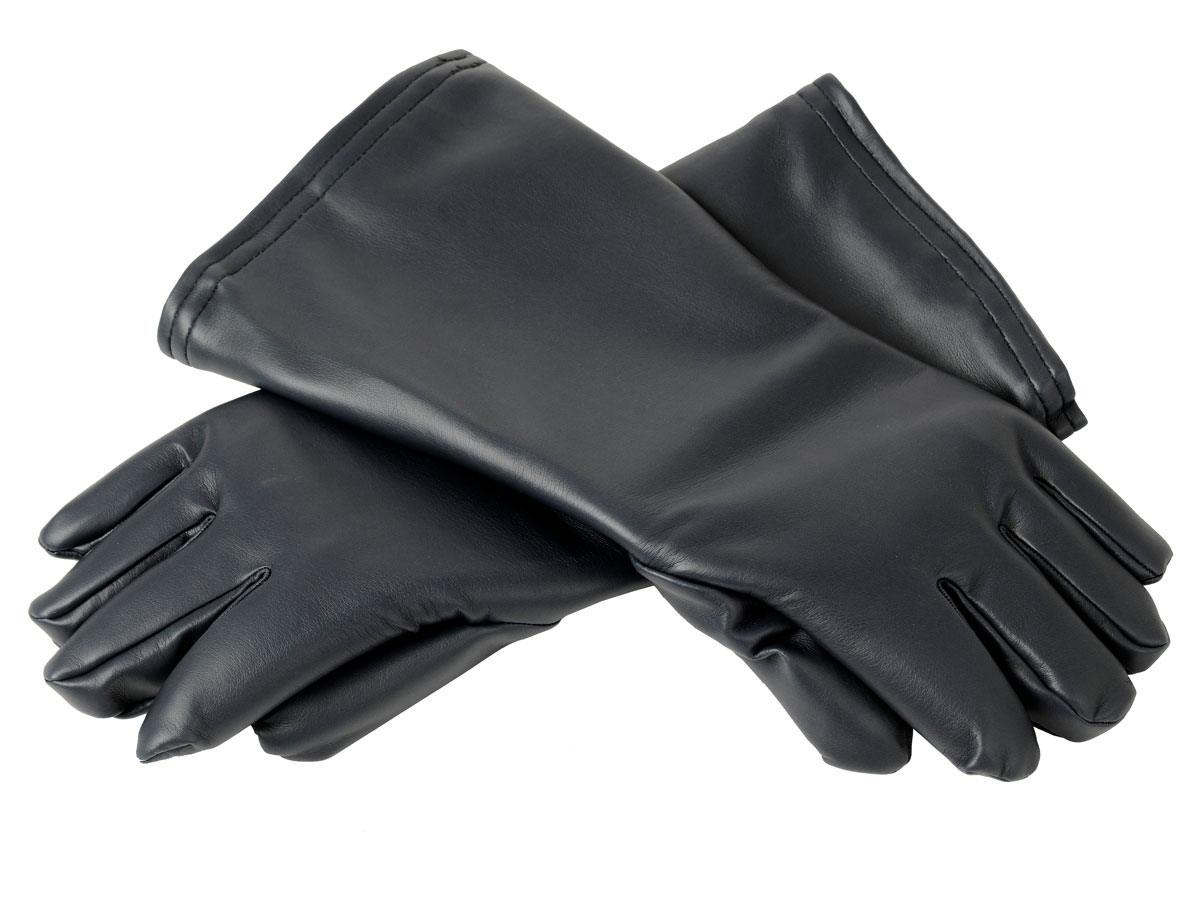
Traditional lead gloves for radiology like the Angiography glove are thick and heavy products designed primarily for maximum possible attenuation. The general lead equivalence is between 0.25 and 0.5mm Pb, which is comparable to standard lead aprons nowadays. They are intended for radiographers and interventional radiology staff who need to handle radioactive materials or for positioning purposes..
The main drawback is the significant lack of dexterity. These gloves are non-sterile and inappropriate for fine surgical work. Surgeons who have tried them and found them unworkable are correct in that assessment.
Radiation-attenuating gloves for surgery are completely different from patient positioning lead gloves. Proguard attenuating gloves focus on maintaining dexterity and tactile sensitivity while still offering significant radiation attenuation. Their lead equivalency levels generally hover between 0.05 and 0.15mm Pb, which is lower than that of angiography lead gloves, but this range provides no hand restriction and allows for the fine motor control needed for procedures.
Purpose-designed attenuating gloves are thinner, which means greater flexibility. There is still a slight tactile compromise compared to normal, non-lead nitrile gloves, but it is still manageable for the procedures where gloves are mandatory.
Lead-free materials have joined elemental lead in modern radiation attenuating gloves. Bismuth and antimony are heavy metals that offer comparable attenuation without the disposal burden of lead. Because every facility already manages hazardous waste, lead-free gloves simply keep glove disposal out of that stream.
Choosing the Right Radiation Glove for Your Procedure
Radiation gloves for the operating room should always be matched to the procedure type and exposure profile.
Orthopaedic Surgery: Fracture fixation, nail insertion, and joint reduction under C-arm guidance involve intermittent beam exposure with the surgeon’s hands throughout the whole procedure. Dexterity requirements are very high for implant handling, so Proguard Elite or Proguard Plus sterile attenuating gloves should be the recommended choice in these scenarios.
Cardiac and Vascular Procedures: Interventional cardiology mixed with vascular surgery often involves prolonged fluoroscopy times inside a high-scatter environment and access sites that generally position the operator near the primary beam. Sterile Proguard radiation attenuating gloves are the correct choice here in most cases.
Urology: Percutaneous nephrolithotomy, fluoroscopically guided ureteroscopy and cystoscopy under fluoroscopy all generate a massive amount of hand dose for the operating urologist. Proguard sterile radiation attenuating gloves are appropriate and should be checked for overall fingertip sensitivity before committing to a specific glove type. We recommend the Proguard RR or Proguard Plus which is constructed of a highly flexible polyisoprene.
Spine Surgery: Fluoroscopy-guided pedicle screw placement and spinal instrumentation involve frequent spot imaging with the surgeon’s hand nearby throughout the procedure. Spinal surgeons specifically have elevated hand dose relative to most other surgical groups. This means that sterile radiation attenuating gloves at the highest possible attenuation level are recommended as long as they don’t severely hinder the surgeon's dexterity. We recommend the Proguard RR3 glove as it provides enhanced protection without the loss of dexterity.
The use cases are distinct. Surgeons operating in the sterile field wear sterile, single-use attenuating gloves like ProGuard, chosen for tactile sensitivity. Reusable positioning gloves such as the angiography glove stay outside the sterile field for tasks like holding a patient in place. The main trade-off for the single-use gloves is cost, as they are more prone to tearing and add up over high-volume lists.
FAQ: Radiation Attenuating Gloves
Do surgeons need radiation gloves? For surgeons performing fluoroscopy-guided procedures, hand radiation dose is a meaningful occupational exposure that is often underaddressed. While the regulatory extremity dose limit is higher than the whole-body limit, high-volume interventional surgeons can accumulate significant hand dose over a career. The ICRP and occupational radiation safety literature recommend that hand dose be measured and managed. Radiation attenuating gloves are the primary tool for reducing that dose at the source, and the need is greatest for orthopaedic, vascular, cardiac, spinal, and urological surgeons working regular fluoroscopic lists.
Are there sterile radiation gloves? Yes. Proguard Elite, RR and Plus are sterile radiation attenuating gloves specifically designed for use in the operative field. They are packaged individually, sterilized to surgical standards, and designed for donning at the scrub table using standard technique.
How much do radiation gloves reduce hand dose? Peer-reviewed data and OR literature indicate that radiation attenuating gloves reduce hand dose by approximately 15 to 60 percent, depending on the glove's lead equivalent, beam energy (kVp), and exposure geometry. At typical OR C-arm operating parameters of 60 to 80 kVp, gloves in the 0.07 to 0.15 mm Pb equivalent range provide clinically meaningful dose reduction while preserving sufficient tactile function for most surgical tasks.
Can you feel through radiation gloves? Angio gloves for radiology do significantly impair tactile sensation so their primary purpose is patient positioning; that concern is accurate for those products. Proguard radiation attenuating gloves are designed with high tactile sensitivity for delicate procedures.
At 0.07 to 0.10 mm Pb equivalent, these gloves are substantially thinner and more flexible. Most surgeons report a brief adjustment period followed by adequate tactile function for the procedures in which they use them. Trialing a product on the non-dominant hand during a low-complexity case before routine adoption is a practical way to evaluate fit and feel.

Let's talk Protech-tion |
Or call 561.627.9769 to get started.
Protech Medical Radiation and Lead Glove Range
Protech Medical provides you with a range of lead gloves and radiation attenuating products, all designed for different clinical environments and exposure profiles.
For facilities having to manage radiation PPE across multiple theatres and clinical areas, our AVA apron inventory tracking software lets you have structured oversight of apron stock, product condition tracking, and even replacement schedule compliance.
A managed inventory system dramatically reduces the risk of continued use of products that have clearly passed their effective service life, which is easy to overlook without being thorough.
Glove procurement should be a part of a bigger PPE framework, not just a standalone decision. Protech’s radiation protection line covers the full system, including thyroid shields, lead glasses, apron accessories, and barriers. For teams looking to build a complete program, our radiation protection PPE checklist covers these items and explains why they’re important.
Protech Medical supplies your department with the complete OR radiation protection system – lead aprons, thyroid collars, lead glasses, lead gloves, and lead accessories. Unsure what you need to buy? Contact us, and we’ll help you select the right equipment for full radiation protection.