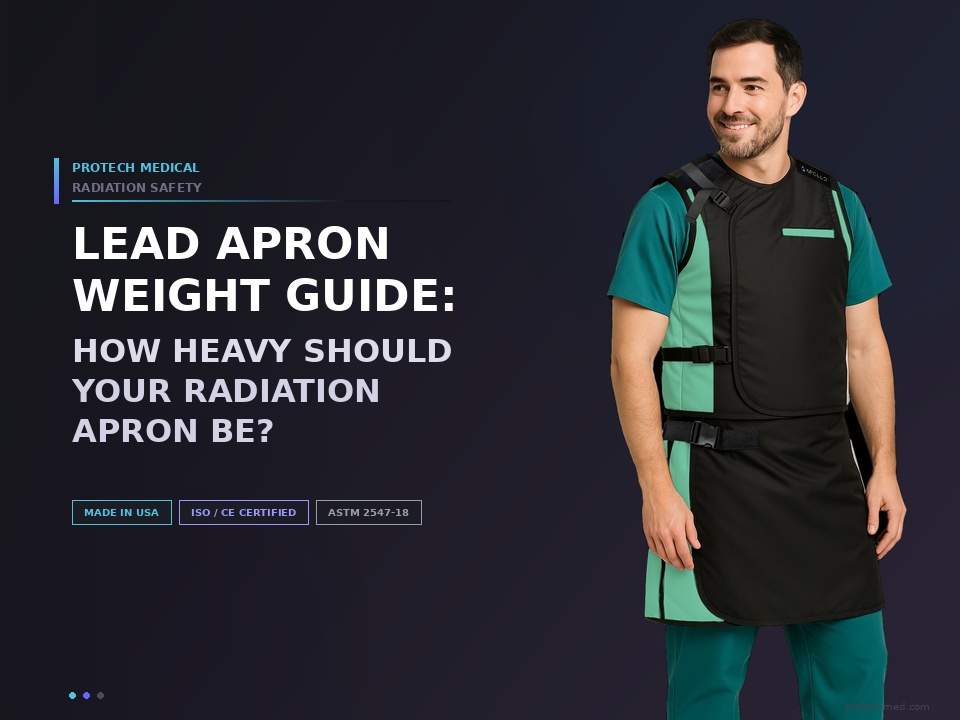
Lead Apron Weight Guide: How Heavy Should Your Radiation Apron Be?
Key Takeaways
- Lead aprons weigh an average of 5-25 lbs, depending on style, protection level, and core material. A frontal apron at 0.5mm Pb typically weighs 7-15 lbs. A two-piece vest-skirt at the same spec runs 12-24 lbs
- Heavier does not mean more protection. Protection is determined by lead equivalency, not total garment weight. A Nano core apron at 0.5mm Pb provides similar protection to a standard lead apron at the same spec while weighing significantly less.
- Approximately 50% of interventional radiologists develop clinically significant back or spine problems over their career. Cumulative apron weight during fluoroscopic procedures is a primary contributing factor.
- The most effective structural response to back pain is switching to a two-piece vest-skirt system, which transfers 50–70% of apron weight from the shoulders to the hips.
Lead aprons all vary in weight depending on the specific use you want to give them. They usually range from 7lbs to 25lbs , depending on the style, material, and protection level you’re looking for. With more than half of all interventional radiologists developing back or spine conditions throughout their careers, the question of “what’s the ideal lead apron weight” comes to mind.
The lead apron you choose should not only be a radiation protection decision, but a musculoskeletal decision, a productivity decision, and most importantly, a decision made with longevity in mind.
This guide gives you all of the tools and information you’ll need to choose the right apron weight for your line of work. Heavier does not always equal ideal protection and lighter does not always come with big risks and compromises. Let us help you navigate your decision.
How Much Does a Lead Apron Weigh?
It depends on 3 main variables: style, protection level, and core material. Understanding how each variable directly affects the overall weight of a lead apron is key when choosing a new apron.
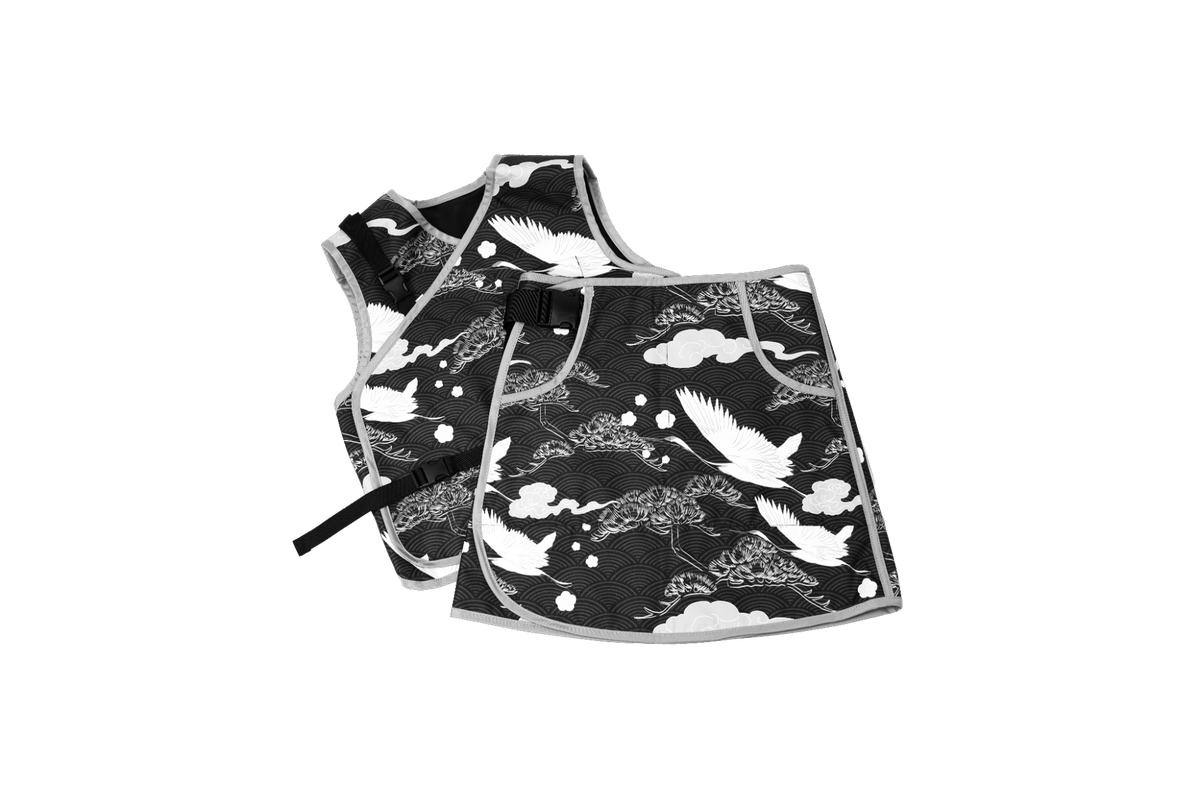
A standard frontal lead apron at 0.5mm Pb generally weighs between 7 and 15 lbs for a medium-sized adult. A wraparound or two-piece vest-skirt at the same protection levels weighs approximately 12 to 24 lbs. The weight difference comes from the overall coverage it provides. A frontal apron protects the anterior torso with minimal lateral coverage, while a wraparound or two-piece covers both the front and back, which in turn doubles the shielding surface and corresponding weight.
The table below gives you a better idea of approximate weights by style and core materials. There are the standard ranges, but they can vary due to size.
| Style | Standard Lead (0.5mm) | Composite / Lead-Free | Nano Core |
| Frontal Apron | 7-15 lbs | 5-12 lbs | 5-10 lbs |
| Wraparound Apron | 13-25lbs | 9-22lbs | 9-16 lbs |
| Vest + Skirt (Two-Piece) | 12-24lbs | 8-21lbs | 8-16lbs |
These numbers give you a practical look at what most buyers underestimate. A radiologist who works for a full shift while wearing a 15lb two-piece lead apron is carrying the equivalent of a moderately loaded backpack between their shoulders and hips for at least 6 hours every day.
For an interventional cardiologist working a full cath lab schedule, the weight starts adding up after thousands of hours.
0.35mm vs 0.5mm: Protection vs Weight Trade-Off
The protection level you choose is by far the most important part of picking an apron for yourself, but it’s the option that affects weight the most when sticking to a single core material.
A 0.5mm apron attenuates up to 99% of scatter radiation at key diagnostic kV ranges (80-100kV). A 0.35mm apron, on the other hand, attenuates 95-97% of scatter at the same ranges. The difference in absolute protection is real but modest for most clinical environments.
The difference in weight is also significant. A 0.35mm apron generally weighs 1 to 2 lbs less than the 0.5mm equivalent, and while it doesn’t seem like a massive difference, after hours of wear, the weight difference becomes noticeable.
For general diagnostic radiology, fluoroscopy in lower-scatter settings, and procedures with limited beam-on time, 0.35mm is adequate, and the weight reduction is beneficial, especially if you’re doing extended shifts.
A 0.25mm option also exists for low-dose situations, but we can’t recommend it for most clinical environments where scatter exposure is high. You save on a lot of weight, but the protection levels drop to 86-91% attenuation.
Lead Apron Weight by Core Material
The material inside the apron’s shielding layer is the biggest factor when it comes to weight. The past decade has brought with it different alternatives to traditional lead that you should consider as well.
Standard Lead: This is still the benchmark when it comes to radiation protection. It’s dense, well-understood, and the material’s protection is consistent across a wide kV range (50-150kV). The drawbacks are clear, though. It’s heavy, relatively inflexible, and requires EPA-compliant hazardous waste disposal at the end of its service life.
Lead Composite Materials: This is a blend of lead with other attenuating compounds. This reduces the total lead content while still providing comparable attenuation when directly compared with standard lead. You can generally lower 10-15%of the weight over standard lead aprons. This option is a good alternative to traditional lead aprons since it provides comparable protection while reducing overall musculoskeletal strain.
Lead-Free Composites: Bismuth, tungsten, and antimony-based blends have all changed a lot over the last couple of years. At diagnostic kVp ranges (50-150kV), which cover most fluoroscopic and interventional procedures, lead-free composites have been delivering attenuation performance that rivals that of standard lead aprons at 10% to 34% less weight.
At lower and higher kVp ranges, attenuation performance begins to differ from standard lead, a factor to consider when it comes to your department’s specific beam energy profile. Believe it or not, it is more difficult to attenuate at the lower kV range than compared to higher kV levels.
A benefit many lead-free materials have over lead is easier end-of-life disposal. This varies by composite, though: some blends can be handled as normal waste, while others, antimony-based composites, for example, are still classed as hazardous and must be disposed of according to your local regulations.
For departments that have LEED certification requirements or sustainability mandates, this ease of disposal is an important consideration since it carries weight well beyond the apron itself.
Protech Medical’s Nano Core: This is currently the lightest core material on the market. Nano composite construction provides excellent attenuation in the 80-100 kVp range and is suitable for most clinical imaging and fluoroscopy procedures while being around 34% lighter than lead alternatives.
Our Nano core material is tested to ASTM F2547-18 standards, highly flexible, and is available in 0.35 and 0.50mm lead equivalences. This lead alternative is perfect for staff who need to wear aprons all day, every day. This nano core material is by far the best available for weight reduction without compromising clinical protection.
Explore the Nano radiation protection line.
The Back Pain Problem: What Apron Weight Does to Your Spine
When more than 50% of interventional radiologists and cath lab cardiologists develop serious back or spine problems throughout their careers due to the use of lead aprons, it’s clear that apron weight should be a major concern for professionals who need to use aprons for hours on end.
Certain lead apron styles do not distribute weight evenly. A surgical drop apron, for example, is only suspended from the shoulder, and it concentrates all the load there, almost like a backpack. With it being at least around 10 lbs, it’s pressure that is always applied to your cervical and thoracic spine.
After hours of carrying the apron's weight, the pressure can cause muscular fatigue, cervical strain, and accelerated lumbar disc degeneration.
The problem is compounded by the forward-leaning posture most interventionalists have to adopt during long procedures, which instantly puts more strain on their posterior spinal musculature.
The consequences are noticeable. Back and spine problems among interventionalists are associated with reduced procedural output, modified work schedule, early retirement from high-volume practice, and, in a small but important number of cases, can lead to a career-ending disability.
There are three practical responses to this problem, and they work best in combination.
Choose a two-piece vest-skirt system: This is one of the best changes you can make when changing aprons. A vest-skirt system transfers roughly 50% of the total apron weight from the shoulders to the hips via the skirt’s waist belt.
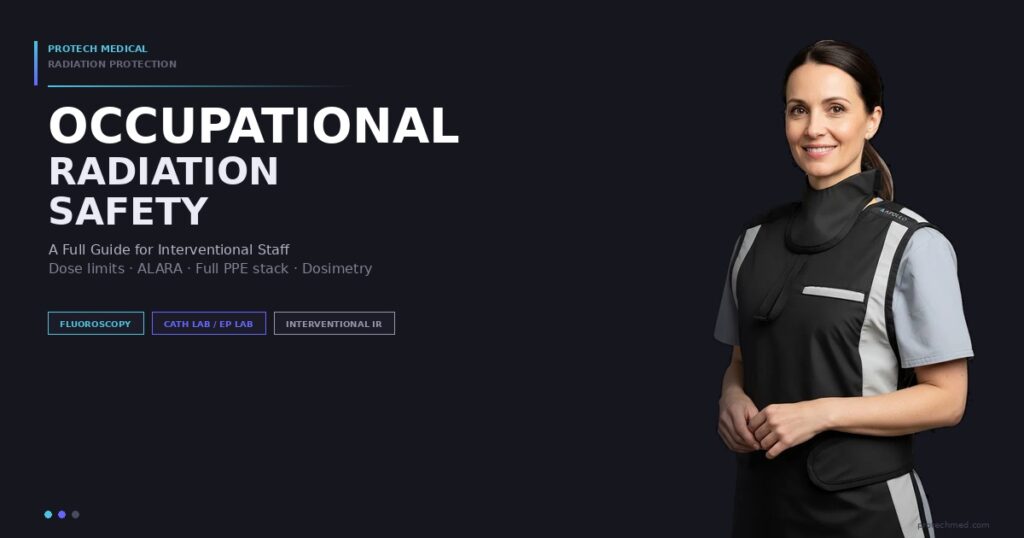
This will instantly reduce cervical and shoulder load, which will be noticeable in long shifts with the vest on for hours on end. They are generally heavier overall than standard one-piece aprons, but they feel significantly lighter where it matters. Frontal styles like the Flexback are a lighter alternative where wraparound coverage isn’t needed, since there’s less material to carry, though a two-piece vest-skirt remains the most effective way to move load off the shoulders and onto the hips.
Move to a lighter core material: A Nano or lead-free composite garment can weigh roughly 34% less than a standard lead equivalent at the same protection level. This is a major improvement that will be noticeable as soon as you put it on.
Use table drapes, patient drapes and a free-hanging or suspended ceiling system when possible: Ceiling-suspended lead barriers, table drapes, and patient drapes do not eliminate the use of a personal apron, but they can reduce the time when full-apron reliance is your only means of radiation protection.
The apron your department provides you with should also take into consideration the physical cost of wearing it daily. While fit is vital, so is comfort. If back pain is a common issue in your department, apron specification is a good first step to improving it. Browse Proguard lead aprons and custom sizing options for lighter-weight configurations.
What Weight Should You Choose?
That’s not a question we can answer for everyone at once. Your apron weight directly ties to the attenuation level you need for your specific procedure type and weekly procedure volume.
Here are some general guidelines you can use for all major apron use cases:
Low-dose diagnostic imaging: This is general radiography, plain films, low-dose fluoroscopy, and dental imaging. 0.25-0.35mm Pb is recommended, but you can go higher if you plan on using the apron for other procedures as well. At lower protection, lead and lead-free aprons aren’t that heavy and can be used with less overall strain.
Moderate fluoroscopy: This is general fluoroscopy, so urological procedures, mixed diagnostics, and normal fluoroscopic workloads. While 0.35mm Pb is enough for this, we would recommend 0.5mm Pb for maximum attenuation. A two-piece vest-skirt should be considered for staff who will be using aprons for extended periods of time. Weight management should be taken into consideration at this weight since like we mentioned before, it can have long-term musculoskeletal issues.
High-dose interventional: This is cardiac catheterization, electrophysiology, interventional radiology, interventional oncology, neuroradiology, endoscopy, and complex spinal procedures. 0.5mm Pb is the standard here with a two-piece vest-skirt or wraparound. A nano core or lead-free composite is recommended to offset the weight for long periods of time.
For standard configurations that ship within 24 hours, check our Apollo Quickship apron range. For custom sizing built for your measurements, look at our apron customization options.
FAQ: Lead Apron Weight
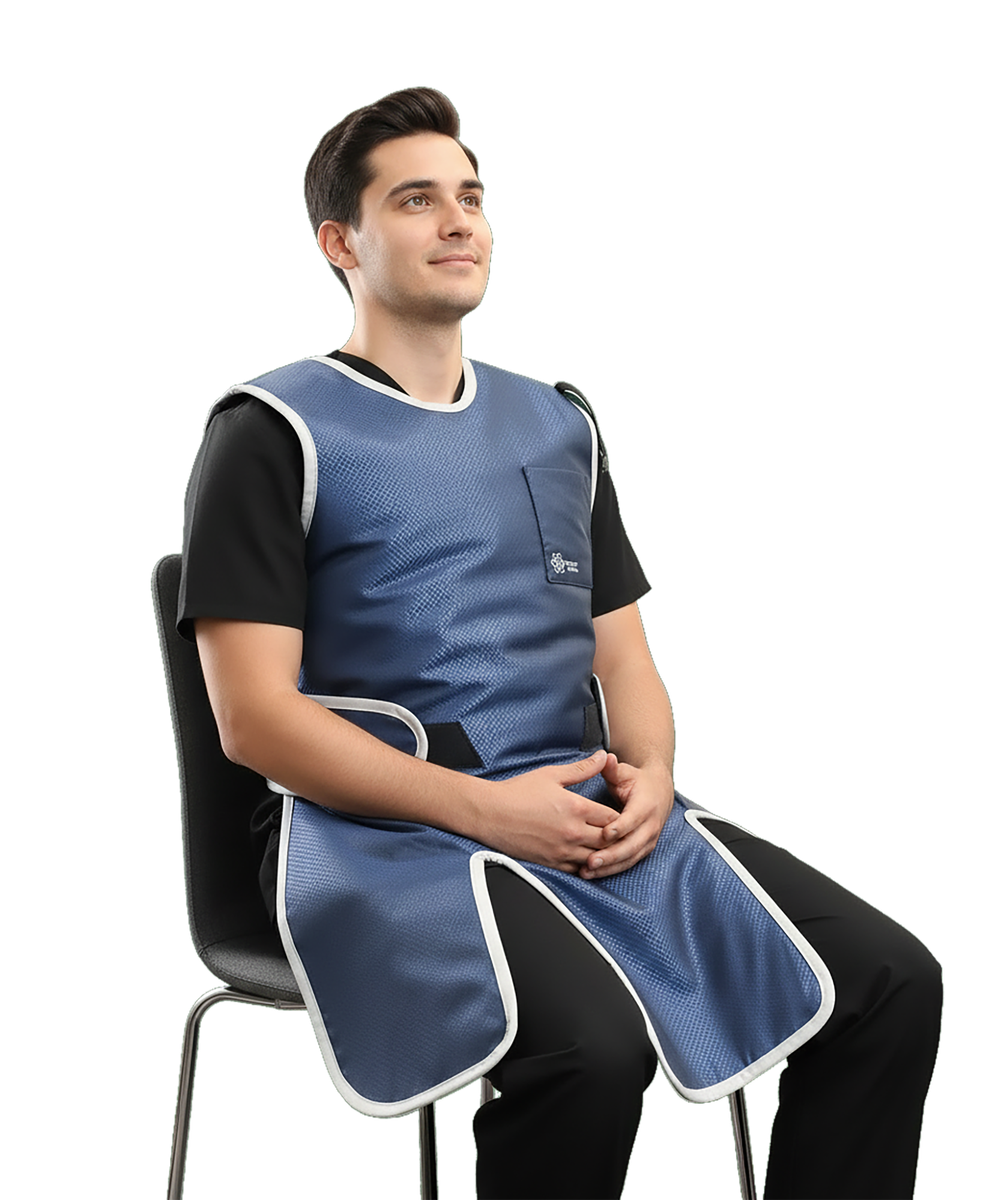
How heavy should a lead apron be? A lead apron should be as light as possible while still meeting the protection specification required for your procedure type. The average frontal apron at 0.5mm Pb weighs 7-15 lbs. A two-piece vest-skirt at the same spec runs 12-24 lbs.
Does a heavier lead apron protect better? Not necessarily. Protection is determined by core material and lead equivalency, the thickness of the shielding layer, not by total garment weight. A 0.5mm Nano composite apron provides similar protection as a 0.5mm standard lead apron while weighing significantly less. Additional weight in an apron typically reflects denser or thicker core material, larger coverage area, or heavier outer fabric, none of which inherently improves protection beyond the specified lead equivalency.
Is a lighter lead apron less safe? No. It is safe, provided it meets the correct protection specification for your procedure environment. A 0.35mm lightweight apron is less protective than a 0.5mm apron, but that is a function of the specification, not the weight. A 0.5mm Nano core apron is lighter than a 0.5mm standard lead apron and similarly protective at key diagnostic kVp ranges (80-100kV). The safety question to ask is not "how heavy is it?" but "does it meet the right protection specification for my procedure type?"
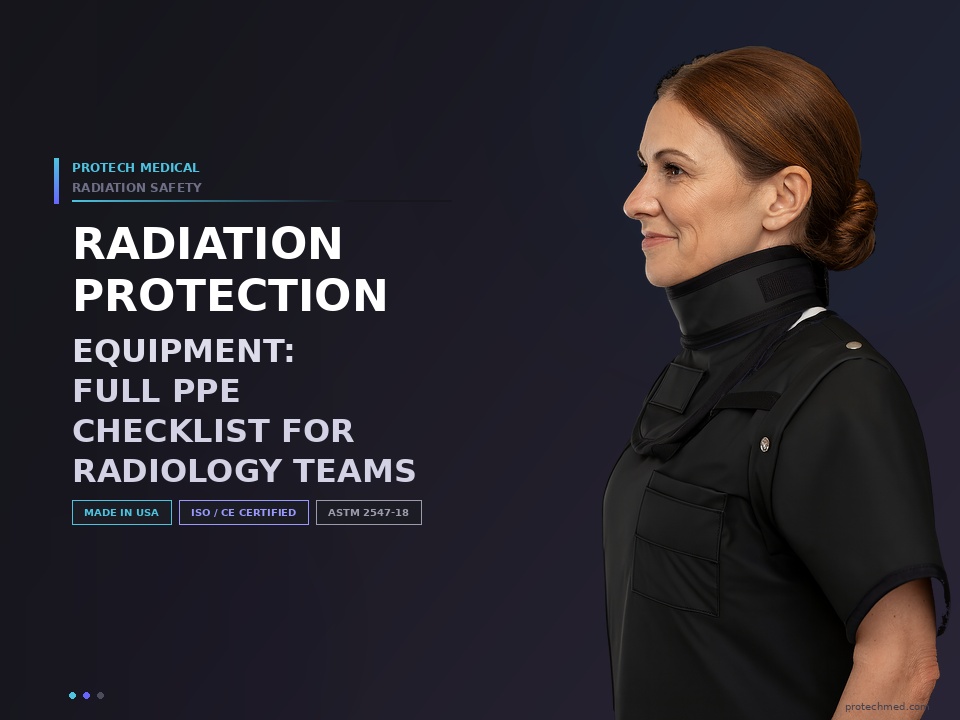
How do I reduce back pain from wearing a lead apron? Three interventions make the most practical difference: wear a properly fitted apron, switch to a two-piece vest-skirt system or frontal apron like the Flexback to transfer weight from the shoulders to the hips, move to a lighter core material such as Nano or lead-free composite to reduce absolute weight, and use ceiling-suspended lead barriers, table drapes or patient drapes during high-scatter procedural phases where possible. If back pain among your interventional staff is a documented problem, see our radiation protection PPE checklist for a full review of protective equipment options across your department.
How much does a lead apron weigh in kg? A standard frontal lead apron at 0.5mm Pb weighs approximately 3.2–6.8 kg. A two-piece vest-skirt system at the same specification typically weighs 5.4-10.8kg. With Nano or lead-free composite materials, these weights reduce to approximately 2.3–5.4 kg for a frontal apron and 3.6-9.5kg for a vest-skirt system.

Let's talk Protech-tion |
Or call 561.627.9769 to get started.
Choose the Right Apron Weight With Protech
Choosing the lightest apron that meets your protection specifications is not a shortcut; it’s the right choice for your health and longevity.
Match the protection level to your procedures. Match the core material with how long you’ll have the apron on, and if back pain is already an issue for you, then switching to a two-piece system should be considered.
Your apron should work with you, not against you.
Explore all of our radiation protection options here.