Why More Radiology Departments Are Updating Their Apron Inventory in 2026
Key Takeaways
- Three major forces are converging in 2026: the GLP-1 weight-loss drug wave, deferred post-COVID procurement catching up, and a new generation of lighter, ASTM-tested core materials that make replacement an upgrade rather than a like-for-like swap.
- With an estimated 30 million GLP-1 users in 2026, many of them healthcare workers, body compositions across radiology staff are shifting, and aprons that fit last year may no longer provide adequate protection.
- Standard lead aprons have a 5–10 year lifespan and require inspection every 12 months; many departments deferred their procurement cycles during COVID and are now significantly overdue.
- Modern Nano and lead-free cores are up to 20-34% lighter than traditional lead, reducing musculoskeletal injury risk and long-term workers' compensation costs.
If you manage a radiology department, apron inventory has probably climbed your priority list this year. That’s not a coincidence — and it’s not the result of any single change.
Three different trends are currently happening this year, each one with its own significance and weight, and they’re creating a moment where updating your radiology inventory is no longer something you can postpone.
GLP-1 weight loss medications are completely reshaping the body composition of people, which can include part of your staff. Post-COVID deferred procurement cycles are coming due, leaving aging inventory overdue for inspection. And a new generation of lighter, ASTM-tested core materials means replacing it is now a chance to upgrade, not just swap old for new.
None of these is speculative. They are all unfolding right now across all radiology departments across the country, and the departments responding proactively are discovering that the inventory update is not simply a cost center. It’s also a massive opportunity to reduce injury risk, lower long-term operating costs, and modernize your overall radiation protection.
GLP-1 Weight Loss is Changing Staff Body Compositions
GLP-1 has moved well beyond diabetes management and is now a mainstream way of weight loss. As of 2026, an estimated 30 million Americans are using GLP-1 medications, and a good portion also work in healthcare.
This is important for radiology departments since it has consequences that might not seem easy to notice at first glance. The lead aprons that were assigned to a staff member on GLP-1 one or two years ago might not fit them correctly anymore. Lead aprons are not one-size-fits-all; they need to fit well in order to provide full protection.
When an apron that was fitted to a 220-pound person is now being worn by the same person at 160 pounds, the whole geometry changes. Coverage gaps start to appear, and the apron no longer stays in place flush on their body anymore.
The same principle can also be applied to weight gain as well. An apron that is too small can lead to issues such as the apron riding up, compressing unevenly, and, in some cases, not covering the areas that it should actually cover.

Apron Replacement Policies and Inspection Requirements
Even before GLP-1 medications became something to think about, radiology departments were already facing a growing backlog problem rooted in the pandemic years. From 2020 to 2022, many institutions deferred non-urgent capital procurement, reduced vendor site visits, and deprioritized equipment refresh cycles. One casualty of that period was the rigor of lead apron inspection. Inspections generally continued — but under staffing and time pressure many were rushed, and aprons that should have failed sometimes passed.
Standard guidance from the International Commission on Radiological Protection (ICRP) and equipment manufacturers consistently recommends that lead aprons go through a visual and fluoroscopic inspection at least every 6 to 12 months, while being replaced every 5-10 years depending on overall usage frequency and storage conditions. Aprons that are used daily and in busy interventional suites reach the end of their useful life a lot faster than those used every other day and in lower-volume diagnostic settings.
If your department purchased a cohort of aprons in 2015 or 2016, those aprons are now around 10 years old. Even aprons that were purchased in 2018 or 2019 are starting to approach the upper end of service life.
Departments that rushed through inspection cycles during COVID might be operating with aprons with internal cracks, delamination, or coverage gaps that are completely invisible to the naked eye but that are still detectable under fluoroscopy.
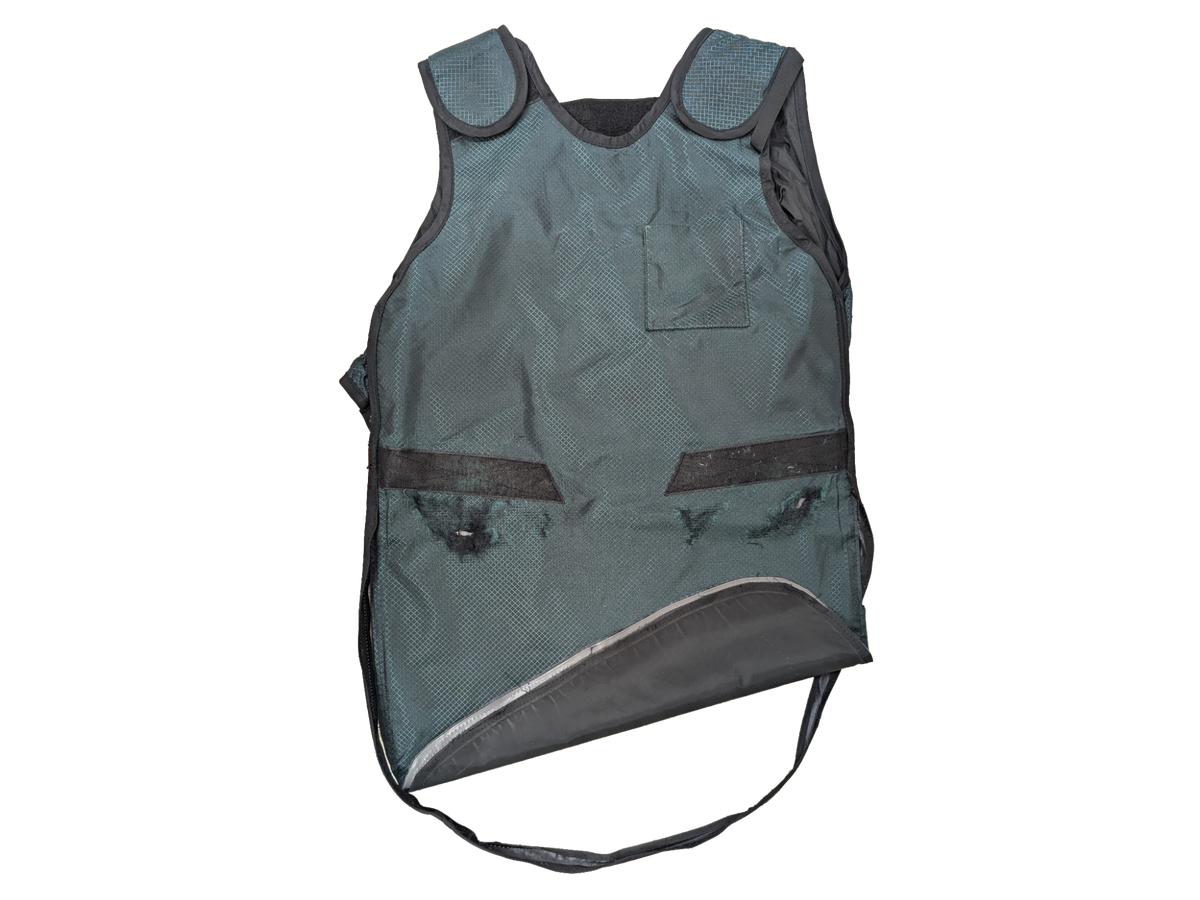
It’s worth being specific about what a damaged apron looks like and what people should be looking out for, because a visual check alone doesn’t cover the required inspection. External cracks, surface peeling, and obvious deformation are easy to notice and identify, but harder and more dangerous damages, such as internal delamination, produce no visible surface sign.
An apron can look and feel like new while still containing cracks that fully compromise radiation attenuation in the areas that it’s supposed to protect. That’s why fluoroscopic or digital X-ray inspections are required.
How to Identify a Damaged Apron
Radiology safety officers and department managers should always flag any apron that has any of the following issues.
- Visible surface tears, deep creases, rippling, or areas where the fabric is peeling.
- Asymmetric weight distribution, which suggests internal shifting of the core material
- Fluoroscopic imaging showing any void, crack, or thinning of the attenuating layer
- Failure to lie flat when hung may indicate the core has shifted or is buckled
- Has been in use for over 10 years regardless of the visual condition
Any apron that has any of these issues should be removed from service instantly and replaced with a new one. A damaged apron in active use is a big regulatory and liability risk, without even taking into consideration the health hazards for the staff members who are wearing it. Poor fit is a separate matter: gaps at the shoulders, sides, or lower abdomen usually mean the apron is the wrong size for its current wearer — common where aprons are shared — and call for resizing or reassignment, not removal from service.
What ASTM Certification Really Means for Lighter Core Materials
The real driver reshaping apron inventory in 2026 isn’t a tightening rulebook; it’s the materials. It helps to be precise about what the standards actually do. ASTM F2547 defines how protective materials are tested, not a minimum level of protection every garment must meet. The stricter, still-evolving benchmark is the international IEC 61331 series (61331-1 and 61331-3); it isn’t a US regulatory requirement, but it’s the standard Protech’s cores are certified to. So for American radiology teams the story isn’t “the standards changed”, it’s that ASTM-tested Nano and lead-free cores now match traditional lead attenuation at far lower weight.
This is important for two different reasons. First, there’s the audit dimension. Surveyors look for aprons that are past service life, overdue for inspection, or undocumented, not for an “ASTM level” a garment fails to hit. A department that walks into a survey with expired or unlogged inventory still faces findings that are expensive to fix under pressure.
Second, and probably the most significant, is that the advancement of ASTM-certified core materials means that an apron refresh is not just a simple replacement of the same old lead apron. It’s an opportunity to adopt materially better technology.
One of the biggest developments in recent years for aprons was the emergence of Nano core composites and refined lead-free blends. Traditional lead aprons have remained as the default in many departments, mainly due to inertia; they work, staff are more familiar with them, and the upfront cost of switching off lead aprons seems high.
But that changes when you examine the total cost of ownership.
Lead-free aprons using rare metals or similar composite blends are roughly 20-34% lighter than their lead equivalents while providing similar radiation attenuation at the key energy levels encountered in diagnostic and interventional radiology (80-100kV).
The Nano core option, which is available through Protech and tested to ASTM F2547-18 standards, achieves a substantial 34% weight reduction compared to lead. For interventionalists and staff wearing an apron for long periods every shift, the weight difference is noticeable and can prevent bigger issues from occurring years down the line.
The Musculoskeletal Case For Lighter Aprons
The medical literature on lead apron-related musculoskeletal injury is well-researched and concrete. Studies show that 50% or more of interventional radiologists and cardiologists report chronic back, neck, or shoulder pain, mainly due to prolonged lead apron usage.
These are not small complaints since the conditions can include cervical disk herniation, lumbar strain, and rotator cuff pathology, and they can all contribute to early retirement.
Workers’ compensation claims related to musculoskeletal injuries are a real and quantifiable cost for healthcare systems as well.
How to Conduct a Department Apron Audit 2026
Understanding why departments are updating their inventories is important, so you get the reasoning behind it. But the biggest question is knowing how to do it. Updating your apron inventory is not something you should do quickly and with no plan. It’s a process that should be thought out over several weeks and requires coordination between clinical staff, procurement, and radiation safety officers (RSO). Here is the normal step-by-step process we recommend.
Step 1: Complete a Physical Inventory Count
Before anything else, you need to know what you actually have and go from there. This may sound obvious, but many departments omit it and then find that their records and actual inventory do not match.
Aprons migrate between rooms, some don’t get stored properly, and others can just outright disappear in some cases due to a lack of proper care.
Physically locate and tag every apron in your department. Make sure to assign each one a unique identifier; it can be a barcode, an asset tag, or, at a minimum, a permanent marker designation. Then record its location, add the assigned user if applicable, the model, and the manufactured date. This baseline inventory will be the foundation for all of the next steps.
Step 2: Perform Visual and Fluoroscopic Inspection
With every apron properly identified and accounted for, you can now conduct a two-part inspection. Start with a very thorough visual inspection of each apron. Check the seams, surfaces, edges, and closures. Hang every apron flat and try to look for any sort of sagging or asymmetry that indicates core shifting. Take note of every single detail of surface damage, deep creases, or deformation.
After that’s done, follow it with a fluoroscopic or digital X-ray examination. This step CANNOT be skipped. Internal delamination is pretty much impossible to detect without imaging. Any apron that shows attenuation voids or cracking on fluoroscopy must be removed from service, no matter how the first test went. Document your findings for every single apron and make sure you’re thorough with what you write.
Step 3: Conduct Per-Staff Fit Assessments
Radiation protection will only provide the protection it advertises if it fits properly. Schedule individual fit assessments for every single staff member who will be using a lead apron regularly. This is important for staff members whose body composition has changed drastically in the last couple of months.
During all fit assessments, confirm that the apron provides good shoulder coverage, that the bottom hem reaches above the knee, that the front panels overlap without a gap when the wearer is in a normal working position, and that the overall weight of the garment is good for the wearer’s build, especially if they will be wearing the apron for most of their shift.
Document every single assessment and note any aprons requiring replacement or resizing.
Step 4: Build and Prioritize a Replacement List
From your inspection records and fit assessments, compile a prioritized replacement list. Any aprons that failed the fluoroscopic inspection should be at the top, followed by those past their service life, then those that no longer fit their wearer and can’t be reassigned, and finally those approaching their end-of-life cycle.
When specifying replacement aprons, use this moment to evaluate whether your department should transition into lighter core materials such as Nano. If you are replacing a significant portion of your inventory, then a change to a lighter core material should be seriously considered, since it can mean that your whole inventory moves to it in one go.
Tracking and Managing Your Apron Inventory with AVA
One of the biggest challenges of apron inventory management is that it’s easy to mess up while also being extremely time-sensitive at times. Aprons are always in multiple rooms, assigned to multiple staff members, and on different replacement timelines, all while being subject to inspection requirements that recur on different schedules. Managing all of this with spreadsheets or paper logs can create human errors that will always surface during compliance audits.
Protech Medical’s AVA software was built to solve this problem. AVA provides radiology departments with a centralized, digital platform for managing every aspect of apron inventory across its entire lifecycle.
Core capabilities include RFID range scans for asset tracking that link every garment to its digital record; group inspections and editing allow you to record inspection results for a large group of aprons at one time; automated inspection reminders calibrated to each apron’s service history and your department’s inspection schedule; and advanced compliance reporting that generates an audit-ready document on demand.
The practicality that comes with AVA is that you quickly shift from having a reactive inventory to a proactive one that is always prepared. Instead of discovering during a regulatory visit that three aprons are overdue for inspection, AVA will flag these issues for you in advance. This gives your whole team time to solve these issues way before having the pressure of an audit that same week.
For departments conducting a 2026 inventory update, AVA is the software that turns a one-time audit into a complete system that simplifies your work.
Protech Medical provides ASTM and IEC-certified radiation protection garments, including Nano and lead-free options referenced before, along with the full AVA inventory management system. Unsure what your department needs for full PPE protection? Contact us, and we’ll guide you through all of the items every department needs.
FAQ: Apron Inventory Updates for Radiology Departments in 2026
How often should lead aprons be replaced? The standard guideline is every 5 to 10 years, depending on use frequency and storage conditions. Aprons used daily in high-volume interventional settings should be evaluated for replacement at the 5-year mark. Aprons stored properly and used less frequently may remain serviceable up to 10 years, provided they pass regular fluoroscopic inspection. Any apron failing inspection should be replaced immediately regardless of age.
What is the current inspection standard for lead aprons? Most regulatory bodies and manufacturer guidelines recommend visual inspection at least every 6 months and fluoroscopic or digital X-ray inspection at least annually. Some high-use environments warrant more frequent inspection. The key point is that visual inspection alone does not satisfy the requirement — internal core damage is detectable only under imaging. Document every inspection with a dated record.
Should radiology departments switch to lead-free aprons? For most departments updating their inventory in 2026, the answer is yes, or at minimum lead-free options should be seriously evaluated. Lead-free bismuth-tungsten composite aprons provide equivalent radiation attenuation at 20 to 34 percent lower weight. Nano-core options achieve a 34 percent weight reduction compared to lead. The long-term occupational health and workers' compensation benefits of lighter aprons are well-documented. The main considerations are upfront cost and ensuring the specific model you select is tested to the current ASTM standard and rated for the protection your department needs.
How does GLP-1 weight loss affect apron fit and safety? Significant weight loss — the kind many staff members are experiencing with GLP-1 medications — can create coverage gaps in aprons that were sized for a larger body. These gaps typically appear at the shoulders, sides, and lower abdomen, and they may not be immediately obvious to the wearer or a casual observer. Any staff member who has experienced significant weight change should have a formal fit assessment conducted, and their assigned apron should be re-evaluated even if it is not otherwise due for replacement.
Can apron replacement costs be deducted or reimbursed? Tax treatment of capital equipment purchases, including radiation protective garments, varies by entity type, jurisdiction, and accounting treatment. Healthcare organizations should consult with their finance or tax advisors regarding whether apron replacement expenses can be treated as depreciable capital assets or expensed in the current period. Some group purchasing organizations (GPOs) and hospital network contracts also include provisions for equipment refresh that may offset direct procurement costs.

Let's talk Protech-tion |
Or call 561.627.9769 to get started.