Lost Weight on GLP-1?
Here's Why Your Lead Apron Needs a Second Look

Takeaways
- The five key fit failure points to check are: lateral side panel gaps, shoulder strap migration, waist closure looseness, hem riding above the knee, and neckline separation.
- Staff who are still actively losing weight should use a correctly fitted Quickship apron as an interim solution rather than continuing to wear an oversized garment.
- Departments with multiple staff on GLP-1 medications should track apron resizing and replacement dates in your inventory system to maintain a defensible compliance record.
More than 30 million people in the US alone are using GLP-1 medications, and a significant portion of them are healthcare professionals who work daily in radiology, fluoroscopy, and interventional suites.
If you are in that group, there is something that absolutely no one has talked about in radiation safety. The apron you used months ago might not be protecting you the way it should anymore.
This is not a comfort problem at all. A lead apron that fits a person at 220 lbs, which is now used by someone who is 175 lbs, can leave critical organs exposed to scatter radiation if you’re not careful.
The side panels might not sit as flush as they used to, the apron may fall short of the knee, and the shoulder straps might start shifting and moving during procedures. Each of these failures represents a real gap in protection, and doing nothing about it can bring long-term consequences.
Below, we’ll go over the areas you should check, when to refit, and how you can choose the right apron for the body you have now.
How GLP-1 Weight Loss Changes Your Radiation Protection
To fully grasp why a lead apron fit matters so much, let’s first go over what the lead apron is actually doing for you.
A high-quality, well-fitted lead apron with 0.5mm Pb equivalence can attenuate up to 99% of scatter radiation at diagnostic kV ranges, but that is only true when it fits well and is properly positioned. The key part here is “properly positioned.”
Protection levels cited in testing will all assume that the lead apron used has full contact with the body and covers the entire area, from the thyroid all the way down to below the knee, and includes side panels that sit flush on the lateral torso. If any of these areas are compromised, then there is no guarantee that the protection will be the same as the one on the tests.
For radiologists or interventional technologists who started their GLP-1 trial at 220 lbs (as an example), an overall weight loss of 15% means eventually weighing 33 lbs less. That is not a minor adjustment. That person’s body fundamentally changed shape to the point where using the same lead apron they were wearing before can cause issues from day 1.
Here are the specific issues that are caused by using an oversized lead apron:
Apron styles can amplify the fit problem: Frontal aprons can be a lot more forgiving when it comes to body size changes since a single piece of garment with side closures is easier to re-tension to maintain proper coverage even after moderate weight loss.
Full coverage styles are completely different in this case. Wraparound aprons and vest-skirt designs are all engineered to fit specific torso geometry. When this changes, the coverage gaps are noticeable. Staff wearing full-coverage aprons who have lost a significant amount of weight over the past few months should treat a refit as part of maintaining the protection the apron style should provide them.
Loss of thyroid coverage: If the apron moves differently on a smaller frame, the upper edge may shift downward, which can expose the lower thyroid area altogether. For staff who don’t wear a separate thyroid collar and instead use a sewn-in variant, this can be a major exposure point.
Shoulder strap migration during long procedures: A vest-skirt system that feels loose at the shoulder will always shift during an extended case. This constant repositioning means that the apron does not fit correctly and should be changed.
None of these failures is as obvious as they might seem when explaining them, but they are gradual, and these types of failures will accumulate over hundreds of procedures, and it’s why it matters.
Signs Your Apron Should Be Changed
Checking your lead apron doesn’t require any sort of radiographic testing; you only need to know what to look for. Run through this quick checklist we made to ensure that your apron fits correctly:
Stable closure: Fasten the apron at your normal tension and check every closure point. A well-fitted apron should always close securely, without any excess strap or the closure sitting further than it should.
At the shoulder straps: Put your lead apron on and start moving around for a while. Bend forward, reach overhead, turn to look behind you, and walk around. Try to notice or ask someone to look if your apron shifts position after some time. A well-fitted apron should move as you move, not slide independently.
At the waist closure: If you’re using a vest-skirt system, then the skirt should fit snugly at the hip without sliding or bunching at the waist. If you constantly find yourself tightening the closure more than you used to months ago, or if it no longer holds your skirt where it should be, then the fit has changed, and you should replace it or have it altered immediately.
At the neckline: The upper edge should sit perfectly at the base of your neck. If there’s a gap of around an inch at the upper front panel, this is a key sign that the apron is no longer the correct size for your shoulder width.
If you notice that you have more than one of these issues, then it’s clear that your lead apron is not fitting correctly, and a refit assessment is due. For a detailed breakdown of how your lead apron should fit and how to properly measure your body for the correct size, visit our apron size and measurement page to learn more.
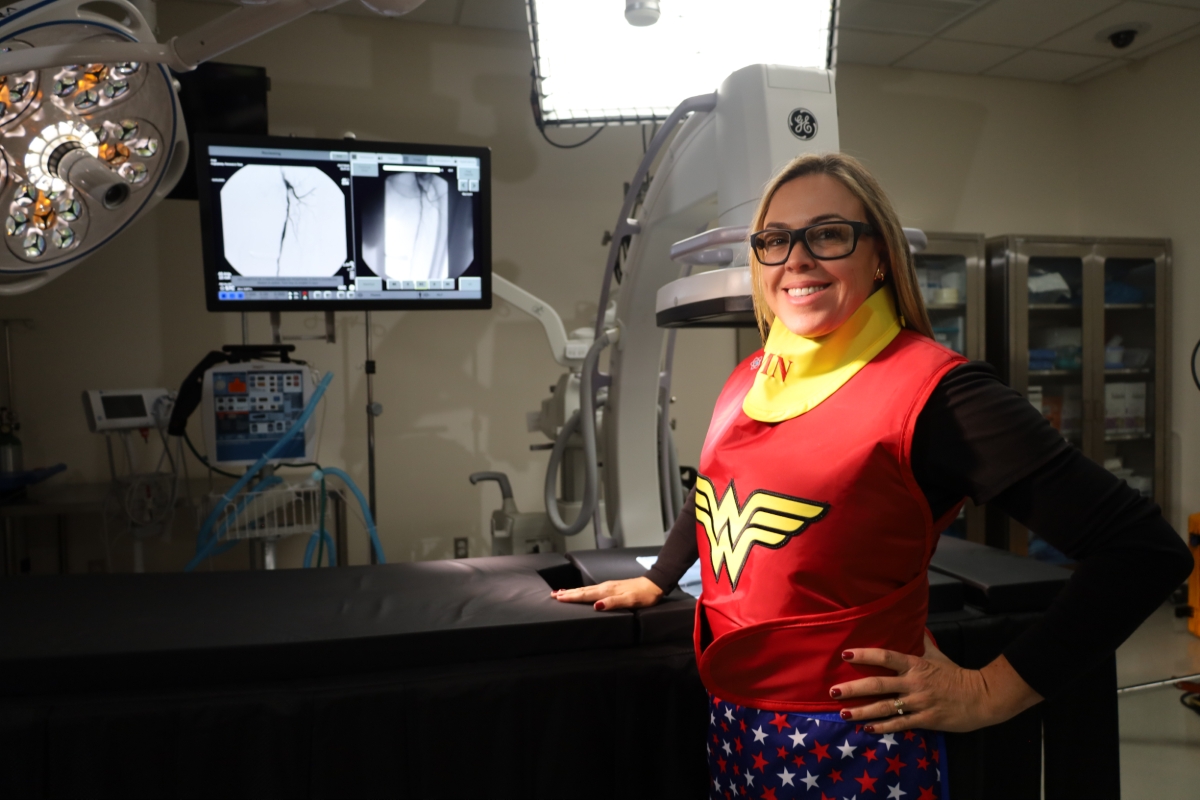
When Should You Refit?
There is no universal regulatory standard that can specify at what weight change you should consider a refit. The Joint Commission and NCRP guidelines only focus on annual radiographic inspection for apron integrity, but they do not talk about fit reassessment tied to body composition.
Based on all the protection failures mentioned before, an easy-to-follow refit trigger can be a change of only 15 lbs or more weight, since at 15 lbs, the torso circumference and shoulder width might have changed enough, resulting in measurable lateral gaps and fit displacement. At over 20 lbs, a refit should be mandatory.
For staff who are currently on GLP-1 medications, a reasonable protocol should look like this:
At the 3-month mark of medication use, go over the whole fit checklist from the section above. Many GLP-1 users experience most of their weight loss in their first three months, so prioritizing refits during this timeframe is vital.
For every 15 lbs of weight loss, be sure to request a formal apron assessment from your radiation safety officer. Make sure to document everything and provide all of the details in your department’s apron inventory records.
When the annual inspection comes around, add a fit reassessment to the standard radiographic integrity check. Apron integrity and fit are two completely different questions, and both should be fully answered in the annual review.
If at any point during a procedure you notice a fit gap, make sure to take notes in your incident log and immediately request an expedited assessment before your next procedure.
Remember, the ALARA principle, which is “keeping radiation exposure as low as reasonably achievable,” applies here as well.
Wearing a poorly fitting lead apron in a high-scatter environment goes against ALARA principles regardless of the reasoning behind it.
Choosing a New Apron After Significant Weight Loss
Ordering a replacement lead apron or having it altered after your weight loss journey is the perfect time to pick an even better-fitted apron than the last one you had.
Consider Alterations: If your apron is still in good condition and budget is a concern, consider having your apron altered. Protech is the only manufacturer that performs alterations and repairs on lead garments. While we can reduce the size of your apron, we cannot “add” material or go up in size.
Start with accurate measurements: Most apron fit problems tend to start from using size charts only and not actually measuring your body. Our Proguard lead aprons are made to your specific measurements: chest circumference, waist circumference, hip circumference, and torso length from shoulder to knee. If the previous lead apron you had came from a standard off-the-rack size chart, then your replacement should be built to fit your current body.
Consider Nano Core: If your current apron is made of a standard lead core, then this might be the best time to consider changing to Protech’s Nano core material. This is by far our lightest option while delivering excellent attenuation at the 80-100kVp range, which is the most common in clinical imaging, while being drastically lighter than lead. Staff who lost over 20lbs of weight might notice how normal lead aprons now feel a bit heavier than before, since it now represents a bigger fraction of their total body weight. Switching to a Nano core at refitting addresses both the custom fit problem while also helping reduce the overall load and stress on the body at the same time.
Choose the right style for your procedure load: A frontal-only apron is good for quick, low-scatter procedures. If you work in fluoroscopy or interventional settings, then a vest-skirt or a Wraparound option can be a great choice, as they fully protect you for those longer procedures and awkward angles during movement.
For standard sizes needed quickly: The Apollo Quickshop line ships within 24 hours and has a range of different standard configurations. This is a great option for a department in desperate need of a lead apron for a staff member who requires it while they organize and decide on the custom apron later on.
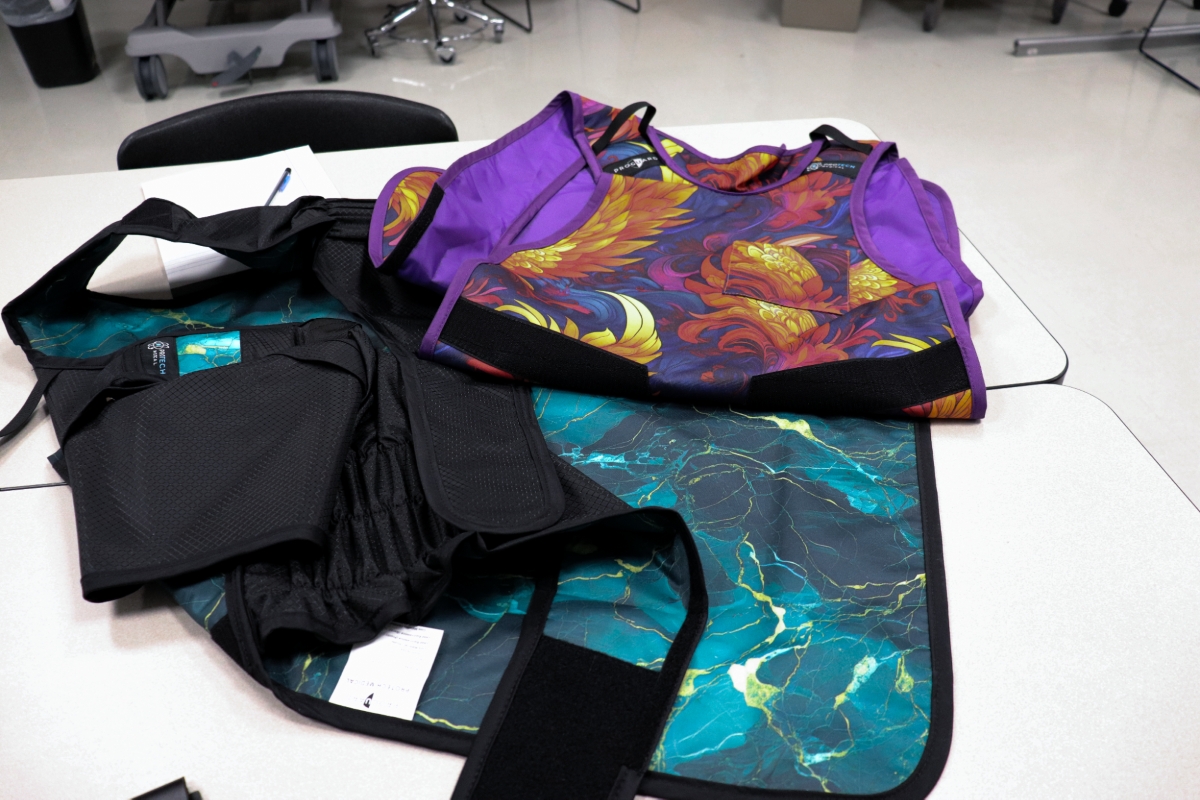
FAQ: Lead Aprons and GLP-1 Weight Loss
Do I need a new lead apron after losing weight on GLP-1? If you have lost 15 lbs or more since your apron was fitted, you should at a minimum run the fit check described above. A loose apron can expose side panels, reduce thyroid coverage, and allow the lower hem to migrate above the knee, each of which creates a real gap in radiation protection. Whether you need a full replacement or an alteration depends on the degree of fit change, but a formal assessment is warranted at the 15-lb threshold.
How often should my lead apron be inspected? The Joint Commission requires healthcare organizations to follow their own safety policies and manufacturer guidelines for annual apron inspections. A fit reassessment should be included in this annual check, but significant weight loss of 15 lbs or more should trigger an immediate inspection rather than waiting for the yearly requirement.
What happens if my apron is too big? An oversized lead apron may leave the axilla region and lower thyroid exposed to scatter radiation. The degree of exposure depends on gap size, procedure type, and scatter intensity. In high-dose environments such as cardiac cath labs and interventional suites, even moderate lateral gaps accumulate meaningfully over a career. Additionally, when hook and loop closures are not properly engaged, they can damage your garment’s exterior fabric and even the inner core material.
Can a loose lead apron cause radiation exposure? Yes. Lead aprons protect by staying flush against the body. If the apron gaps or hangs away, it only shields the areas it still covers during the procedure. A loose garment simply cannot provide its rated level of protection.

Let's talk Protech-tion |
Or call 561.627.9769 to get started.
Protech Builds for the Body You Have Now
GLP-1 medication alone has produced one of the largest and fastest shifts in body composition that the healthcare industry has ever seen. Annual apron inspections were focused on catching material failures while ignoring the assumption that the person wearing the apron might have lost weight.
The good news is that the fix is straightforward. A full fit check takes a maximum of five minutes. Custom sizing and inventory tracking software already exist to make this change manageable and easy for both the person and the department itself.
A lead apron that no longer fits properly is not protecting you the way it should, and you shouldn’t settle for subpar protection. Your body has changed, and your apron should reflect that, and we can build you one that does.