Lead Aprons
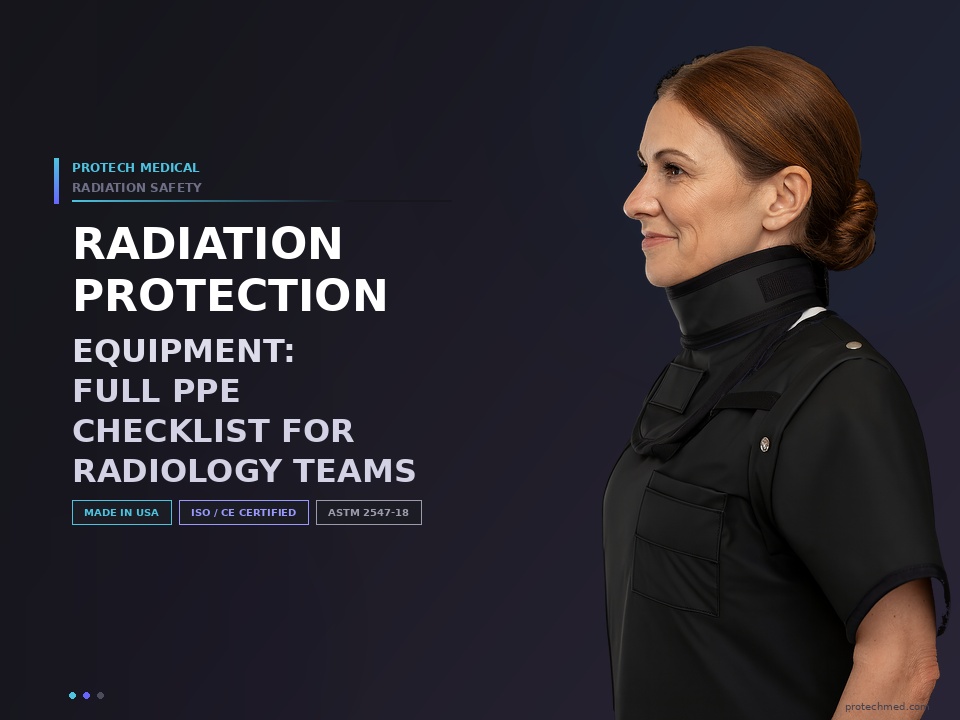
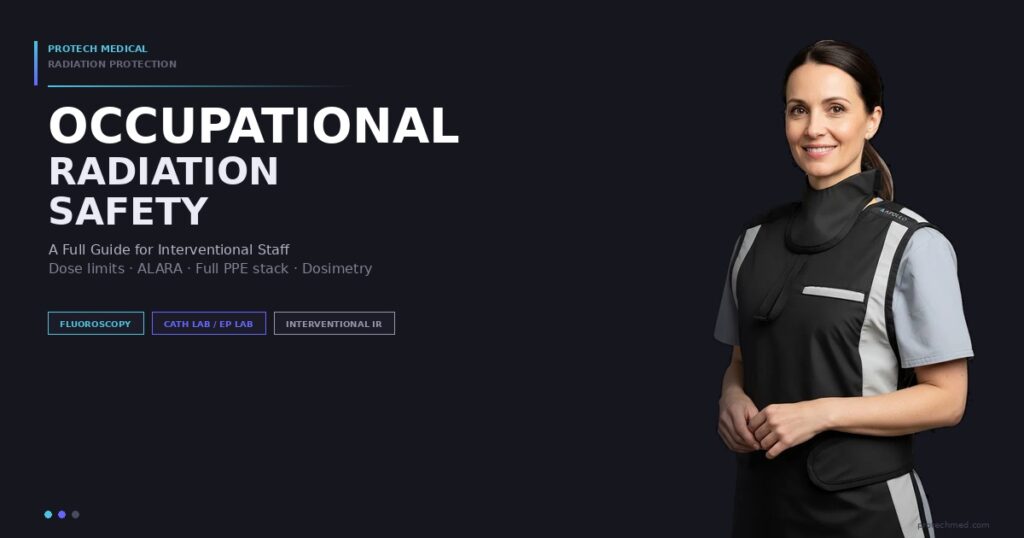
Radiation Protection Aprons for Medical Professionals
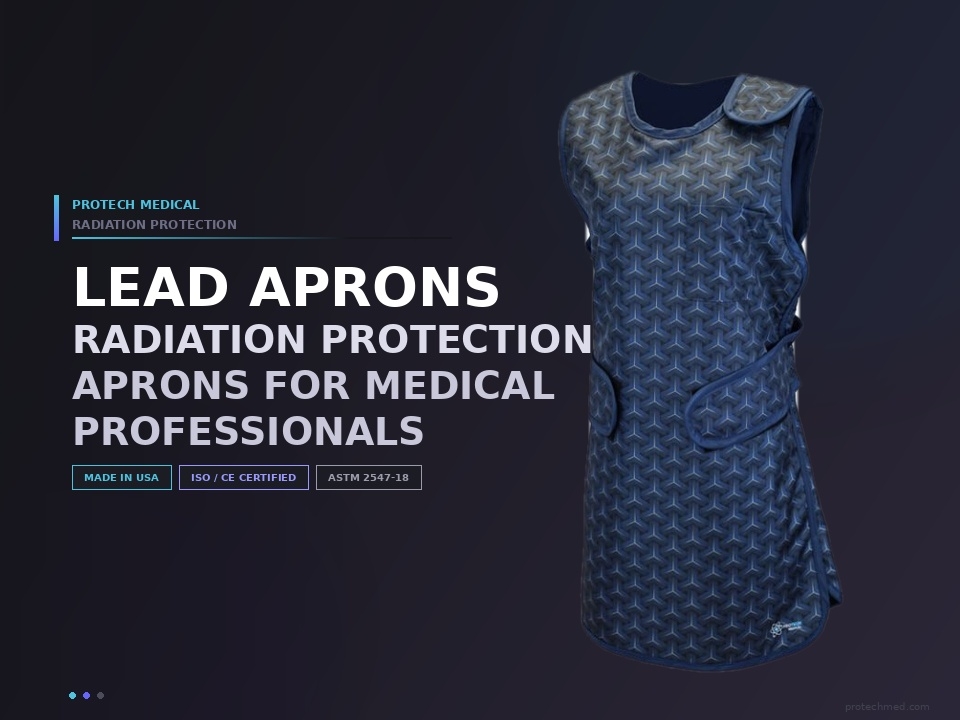
Every fluoroscopic procedure, interventional case, and portable radiograph adds to a clinician’s lifetime radiation dose. Lead aprons remain the most important personal protective device standing between medical staff and scattered ionizing radiation.
Yet selection, fit, and maintenance are generally treated as afterthoughts rather than clinical decisions. For radiologists, interventional cardiologists, fluoroscopy operators, and the purchasing managers responsible for outfitting them, understanding the technical and ergonomic details of radiation protection aprons is no longer optional.
This guide covers the biggest challenges medical teams face when selecting and using lead aprons and shows how proper specification, material choice, and fit directly address each one.
The Cumulative Dose Problem and Why Radiation Protection Aprons Matter.
Occupational radiation exposure in interventional suites is not a single dose event. It’s a decades-long accumulation of low-dose scatter that increases the stochastic risk of cancer, cataracts, and tissue injury.
Staff working within six feet of a fluoroscopy table can routinely encounter doses exceeding 0.05 mSv per hour, and interventionalists frequently approach one-third of the annual 20 mSv occupational dose limit each year recommended for radiation workers.
Even if the threat itself is invisible and undetectable in real time, it is cumulative across every procedure performed.
Inadequate shielding has significant consequences. Individually, clinicians face an elevated long-term risk of radiation-induced malignancies, including thyroid cancer, as seen in documented litigation where employees alleged that improper radiation protection practices contributed to their diagnoses.
Institutionally, facilities that fail to meet ALARA (As Low As Reasonably Achievable) standards expose themselves to regulatory action, failed Joint Commission audits, and workers’ compensation claims.
Operationally, a dose-conscious workforce that does not trust its PPE may avoid complex cases or shorten procedure times in ways that compromise patient care.
What Can a Custom Lead Apron Do Here?
A properly specified lead apron dramatically attenuates the scatter radiation that reaches the torso, where the highest concentration of active bone marrow and radiosensitive organs resides. Lead aprons cover approximately 75 to 80 percent of a person’s active bone marrow.
When paired with thyroid shields, leaded eyewear, and disciplined use of distance and time, lead aprons transform radiation exposure from an unmanaged occupational hazard into a controlled, monitored, and minimized part of clinical practice.
Understanding Lead Equivalency.
Lead equivalency, expressed in millimeters of lead (mm Pb), is the most misunderstood specification in radiation protection aprons. The purchasing team routinely defaults to “the thickest available” on the assumption that more lead always equals better protection, while clinical staff might be issued lead aprons with equivalency values mismatched to the energies used in their department.
Specifying insufficient lead equivalency leaves staff under-protected in high kVp environments such as interventional cardiology and vascular surgery, where scatter energies are significant.
Over-specifying has the opposite problem, where it imposes unnecessary weight on clinicians without providing a clinically meaningful increase in protection.
Peer-reviewed research published in the Journal of Vascular Surgery found no statistically significant difference in radiation attenuation between 0.5 mm and 0.35 mm lead-equivalent aprons during fluoroscopically guided interventions, with attenuation rates of 89 percent and 86 percent, respectively, at the wearer's upper quadrant chest wall position.
What Does That Mean For You?
It means that lead equivalency should be matched to the procedure type and beam energy, not chosen by default. Three main standard values dominate the market.
- 0.25 mm Pb aprons attenuate approximately 90 percent of scatter at typical diagnostic energies and meet the minimum requirement for many personnel not standing in the primary beam. They are well-suited for general radiographic procedures and lower-energy applications.
- 0.35 mm Pb lead aprons have been tested to provide radiation attenuation at diagnostic kV ranges comparable to higher-weight alternatives, while reducing overall garment weight.
- 0.5 mm Pb aprons remain the benchmark for high-exposure environments. They attenuate 95 to 99 percent of scatter radiation and are recommended for pregnant workers, primary operators in interventional labs, and facilities where regulatory or institutional policy requires maximum protection at all times.
Purchasing decisions should begin with a clear understanding of which staff members stand where, for how long, and at what beam energies. From there, equivalency becomes a specification rather than an estimate.
Not sure which lead equivalency or apron style fits your department the best? Protech Medical’s team can help you specify the best protection for your procedure mix.
The Weight Problem.
A conventional lead apron typically weighs 10 to 15 pounds, and the musculoskeletal effects of wearing one for extended periods are well documented. A 15-pound apron has been estimated to exert up to 300 pounds of load on intervertebral disks during normal movement.
Harvard Medical School’s data on joint reaction forces show us that walking, bending, and twisting can multiply the load of the apron by the static weight of the apron by 1.5 to 5 times. This resulting strain has created what cardiology literature now terms “interventional disc disease”.
A Society for Cardiovascular Angiography and Interventions survey found that approximately 50 percent of interventional cardiologists reported at least one musculoskeletal injury, with prevalence essentially unchanged between the 2004 and 2014 iterations.
Beyond the individual toll, musculoskeletal injury drives absenteeism, early career attrition, and the hidden cost of experienced clinicians leaving interventional practice early.
What Can You Do?
Modern radiation protection aprons address weight through both material science and structural design. Lead-composite aprons blend lead with lighter attenuating elements to reduce overall weight by up to 40 percent while maintaining equivalent shielding performance.
Lead-free alternatives using tin, bismuth, antimony, or tungsten can also achieve comparable lead equivalency with reduced mass and improved recyclability, although performance at higher kVp should be verified against the specific clinical application.
For staff with existing cervical or thoracic spine concerns, these ergonomic choices are not luxuries; they are the difference between a sustainable career and a preventable injury.

Style and Coverage: Matching the Apron to the Procedure
Not every clinical scenario demands the same apron style. Front-only aprons, wrap-around aprons, skirt-and-vest combinations, and maternity styles each solve different problems, yet many departments stock a single default style and expect it to perform across every application.
Aprons that are too large allow scatter to pass through oversized armholes, while front-only styles leave the back vulnerable when staff members turn away from the source during a procedure.
Poor coverage undermines the core purpose of the apron. Studies evaluating protective garment use have found that nearly half of wearers described their garments as uncomfortable or ill-fitting, and ill-fitting lead aprons go hand-in-hand with both increased radiation exposure and higher rates of back pain.
In interventional settings where operators rotate relative to the radiation source, a front-only apron effectively provides incomplete protection. In shorter procedures, the weight and heat burden of a wrap-around apron may outweigh the actual radiation risk.
Which Lead Aprons Should You Pick?
- Frontal aprons offer quick donning and doffing for shorter procedures where the wearer reliably faces the source, such as certain general radiography and some C-arm applications.
- Wraparound aprons provide 360-degree coverage and are indicated for interventional cardiology, vascular surgery, and any procedure where staff frequently turn their back to the radiation source. Weight is distributed differently than in a front-only apron, and axial strain may be lower despite having a higher total mass.
- Skirt-and-vest combinations split the load between the shoulders and the hips, making them the preferred configuration for high-volume fluoroscopy operators and anyone with documented spinal concerns.
- Maternity aprons incorporate additional shielding (generally an extra 0.5 mm Pb over the abdomen) for pregnant workers, who should also wear a fetal dosimeter at the waist under the apron and follow institution monitoring protocols.
Sizing should be verified at fitting, not assumed from a chart. An apron that rides high at the armpits or has gaps at the side seams does not provide the protection its specification implies
The Compliance Gap: Inspection, Documentation, and Lifecycle Management
A lead apron is not a fit-and-forget type of equipment. The internal shielding material can crack, tear, or thin with repeated folding, improper storage, or just from aging. Defects in apron integrity can grow by more than 270 percent over a ten-month period.
Many of these defects are invisible to the naked eye and cannot be detected by palpation alone. Yet inspection programs at many facilities remain informal, undocumented, or reliant on visual checks that miss the very defects most likely to cause harm,
Both the regulatory and liability consequences are significant. The Joint Commission requires proof of annual apron inspections as part of radiation safety compliance. Facilities that cannot produce documented inspection records risk audit findings, and in the worst cases, undetected apron failures have been cited in occupational exposure litigation.
Operationally, undiagnosed defects mean that staff believe they are fully protected when in reality they are not, which is the most dangerous failure mode in any PPE program.
What You Can Do to Avoid This
A defensible inspection program comprises three core elements. An annual radiographic or fluoroscopic inspection is the standard of care, since X-ray imaging is the only reliable method for detecting small internal defects in the shield layer.
Fluoroscopic examination should use manual settings between 60 and 80 kVp, not automatic brightness control, which can both damage the lead apron and produce unreliable results.
Rejection criteria generally follow the Lambert and McKeon thresholds. These include defects larger than 15 mm² over critical organs such as the thyroid or gonads, and defects larger than 15 mm² over overlapped areas or the back.
Documentation should capture each apron’s unique identification number, inspection date, inspector, findings, and pass/fail determination. Protech’s AVA apron inventory tracking software is designed specifically for this workflow, which gives facilities a centralized system to log inspections, track apron lifecycle status, flag marginal units, and produce audit-ready records on demand.
Combined with proper storage on approved racks rather than folded or draped over chairs, a structural inspection program extends overall lead apron lifespan, protects staff, and satisfies accreditation requirements in a single workflow.
Ready to upgrade your radiation protection program? Browse Protech Medical’s lead aprons or request a fitting consultation for your team.
A Practical Framework for Purchasing Lead Aprons
Purchasing managers responsible for outfitting radiology, cath lab, or surgical teams often face a catalog of options with overlapping specifications, competing ergonomic claims, and pricing that spans a wide range.
Without a well-structured decision framework, procurement defaults to price, brand familiarity, or the preferences of whichever clinician spoke loudest in the last budget meeting.
Uninformed purchasing decisions cascade across a facility. Under-specified lead aprons create exposure risk and compliance gaps. Over-specified lead aprons create ergonomic burden and overall staff dissatisfaction. Lead apron purchases without considering inspection and lifecycle costs appear inexpensive at acquisition, but become costly when replacement cycles are shorter or when compliance gaps trigger corrective action.
Organize Before Buying
A sound lead apron specification addresses six dimensions in sequence.
- Procedure Profile: What imaging modalities, kVp ranges, and exposure durations will the lead aprons support?
- Lead Equivalency: 0.25, 0.35, 0.5 mm Pb matched to exposure conditions and institutional policy.
- Material: Traditional lead, lead-composite, or lead-free, with manufacturer attenuation data verified at relevant energies.
- Style and Fit: Available in front, wrap-around, or skirt-and-vest styles, with each apron sized to the wearer rather than averaged across the department.
- Lifecycle Factors: Inspection cadence, expected service life, and disposal or recycling provisions.
- Wearer Experience: Adjustable straps, weight distribution features, breathable outer shells, and antimicrobial fabrics that support compliance by making the apron easier to wear for an entire shift.

Partner with ProTech Medical for Radiation Protection You Can Trust
Lead aprons are clinical equipment, and the quality of that equipment determines the quality of protection your team receives. The difference between a lead apron that performs to specification for its full service life and one that fails inspection within two years is rarely visible at the point of purchase.
It shows up later in dose badge readings, in staff back pain, in audit findings, and in the replacement invoices that arrive months or even years sooner than expected.
Protech Medical builds radiation protection aprons for clinicians and facilities that demand uncompromising safety. Our lead, lead composite, and lead-free aprons are manufactured to verified attenuation specifications across the 0.25, 0.35, 0.5, and 0.7 mm Pb equivalencies, with documented performance data at the kVp ranges your department routinely uses.
Protecting the people who deliver care is not a line item. It’s a commitment that begins with the right lead apron and continues with the right partner.
Ready to specify radiation protection aprons the right way? Contact Protech Medical to discuss your department’s requirements, request product documentation, or arrange a fitting consultation for your team.