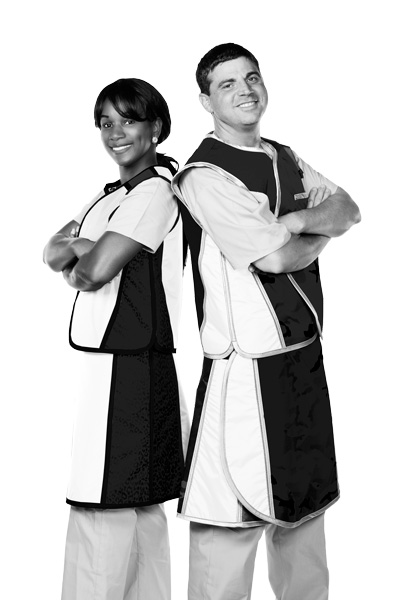
Thyroid Awareness Month
A Small Gland worth protecting
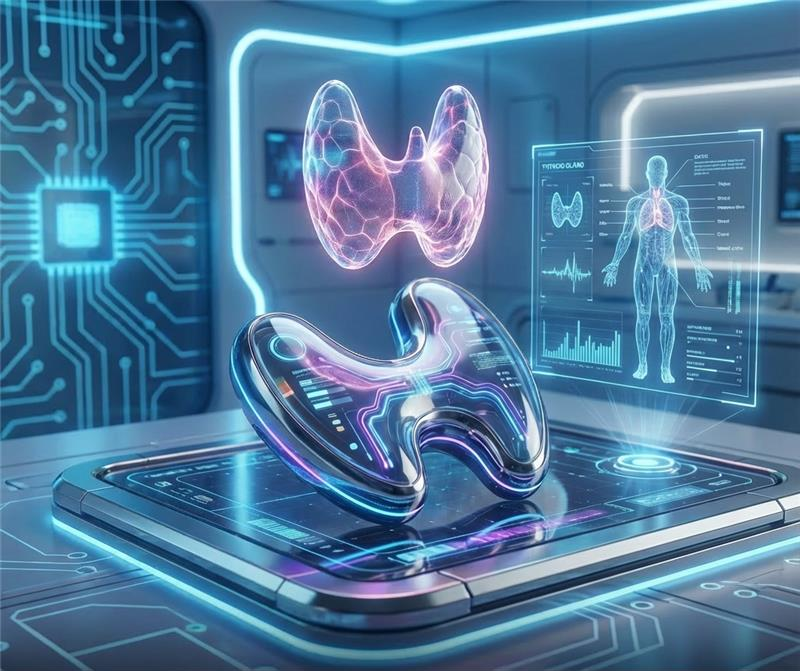
A Quick thyroid Awareness Reminder
January is recognized as Thyroid Awareness Month, a good time to highlight a gland that’s small, easy to ignore… and incredibly important.
For imaging professionals, it’s also a great moment to talk about occupational protection, because the thyroid sits at the front of the neck, and many roles in fluoroscopy and interventional imaging require you to work close to the patient for long stretches.
What the thyroid does
Think of thyroid hormones as your body’s “pace setters.” The thyroid releases hormones commonly referred to as T3 and T4, which influence how your body uses energy (metabolism) and supports a wide range of normal functions, especially growth and development.
When the thyroid isn’t working properly, people often feel it. Energy levels change, temperature tolerance can shift, and overall “pace” in the body can speed up or slow down.
Why the thyroid deserves special attention
Ionizing radiation exposure is a known risk factor for thyroid cancer, with the strongest evidence tied to higher-dose exposures and exposures earlier in life. For occupational teams, the key isn’t alarm, it’s smart risk management.
Your day-to-day exposures are usually far lower than the kinds of exposures most often discussed in thyroid cancer risk summaries. But repeated low-dose exposure over time is exactly why radiology safety culture focuses on consistency: good habits, good shielding, and good equipment practices.
The real occupational issue isn’t the primary beam. it’s scatter.
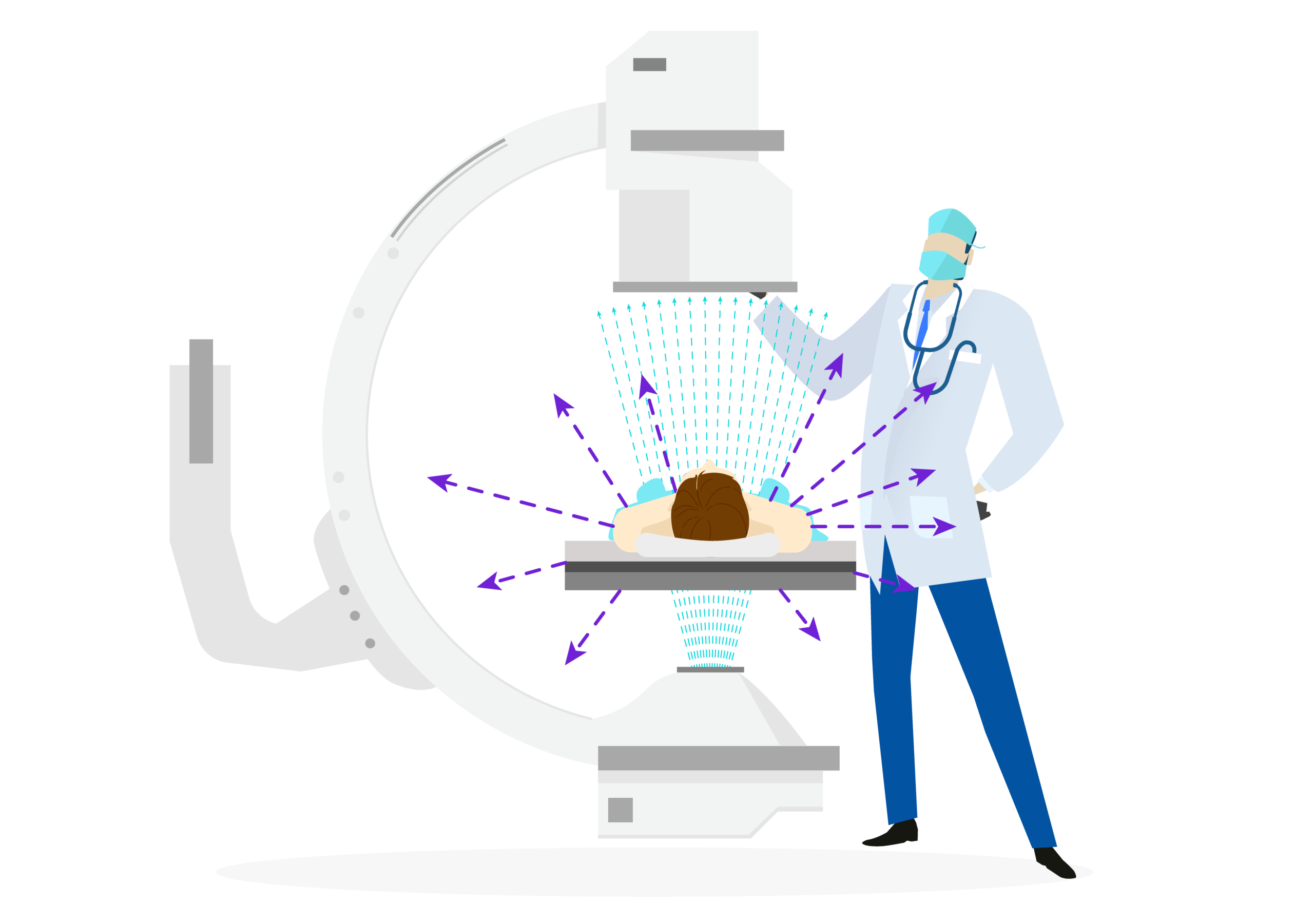
Most staff are not standing in the primary beam. The exposure that matters for many clinical teams is scatter radiation, x-rays that change direction after interacting with the patient.
Two practical points that matter in the room:
- During fluoroscopy, staff may be exposed to scattered radiation from the patient, especially when close to the table for devices, anesthesia, positioning, or sterile tasks.
- Scatter is most intense on the beam entrance (tube) side of the patient, which is why standing on the image receptor side (when feasible) helps reduce staff dose.
It's worth noting that reducing patient dose reduces staff dose. Scattered radiation in the room is directly proportional to patient dose, so when patient dose goes down, staff dose goes down too.
Additionally, a convenient solution for reducing scatter at the source is Scatterguard Patient Drapes. Attenuating up to 95% at 90kV, patient drapes are an excellent addition to the radiation protection arsenal without adding any musculoskeletal strain on medical personnel.
Where a thyroid collar fits in (why it’s more than “extra PPE”)
A thyroid collar is one of the simplest ways to protect a sensitive area located right where scatter can reach, especially for staff who spend hours per day near the table.
Multiple safety resources and best-practice protocols explicitly include thyroid protection as standard occupational PPE in fluoro-heavy environments:
- A fluoroscopy operator safety tip sheet recommends thyroid shields, noting they’re recommended, especially for younger personnel.
- A cath lab best-practices protocol states that operators and staff should wear a lead apron, thyroid collar, and protective lead glasses.
- Guidance on lead protective equipment notes that if an operator’s thyroid is likely to receive dose, it’s advisable to wear additional protection for the thyroid.
- Thyroid collars are recommended for personnel with higher collar monitor readings, and are commonly used because they add protection with relatively minimal inconvenience.
A simple “Thyroid Protection Checklist” for teams
- Stand on the image receptor side when you can. Scatter is typically highest on the entrance-beam (tube) side. When workflow allows, choose the detector side.
- Avoid over-table tube setups when possible. Over-table tube positions can increase exposure risk to the eyes and upper body; under-table systems direct more backscatter toward the floor and away from the operator. Vermont Department of Health
- Use the room shields like you mean it. Ceiling-suspended shields and table-suspended curtains can significantly reduce occupational dose when positioned correctly.
- Make thyroid collar wear “automatic.” If you’re in the room and not behind a large mobile shield, treat the thyroid collar as standard kit (like your apron).
- Wear dosimeters correctly (and actually review the data). Best-practice guidance includes wearing two dosimeters: one at the thyroid collar and one under the apron to better monitor occupational exposure.

A Thyroid Awareness Month takeaway for imaging environments
Your thyroid quietly supports systems you rely on every day. In imaging and procedural environments, protecting it is one of those “small habits” that can matter a lot over a career.During Thyroid Awareness Month, it’s a good time to:refresh staff training on scatter and positioning,confirm your monitoring and PPE practices, andmake sure thyroid collars/shields are available, used correctly, and maintained.
Educational content only; always follow your Radiation Safety Officer/medical physicist guidance and local regulations.